Where you will go
Armenia, region by region
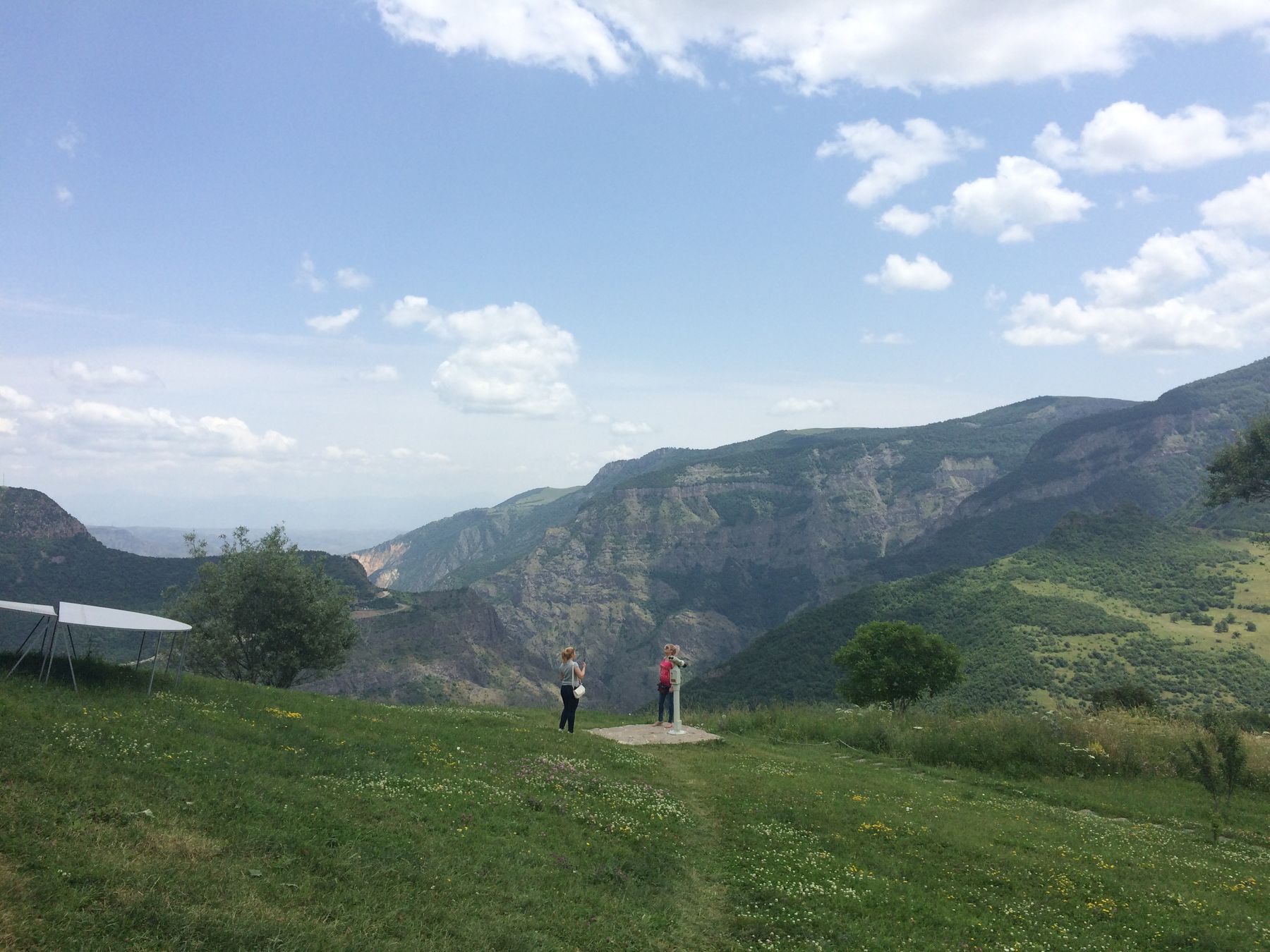
The country is about the size of Belgium and sits between 400 and 4,090 metres above the sea. That compression is the whole appeal — you can be on a hot plain at breakfast and standing on snow by lunch.
About the UNESCO labels on this pageArmenia has exactly three inscribed World Heritage properties: Echmiadzin with Zvartnots, Geghard with the Upper Azat Valley, and Haghpat with Sanahin. Several other sites — Garni, Erebuni, Noravank, Tatev — are on Armenia's Tentative List, which is a nomination rather than an inscription. The Matenadaran manuscripts and the Byurakan survey are on the Memory of the World Register, which is a separate programme for documentary heritage. A lot of tour marketing blurs these together. We label each site with exactly what it has.
Yerevan
7 placesA city of pink volcanic tuff, laid out on a drawing board in 1924 and now nearly 2,800 years old — because it began as an Urartian fortress in 782 BC.
Republic Square
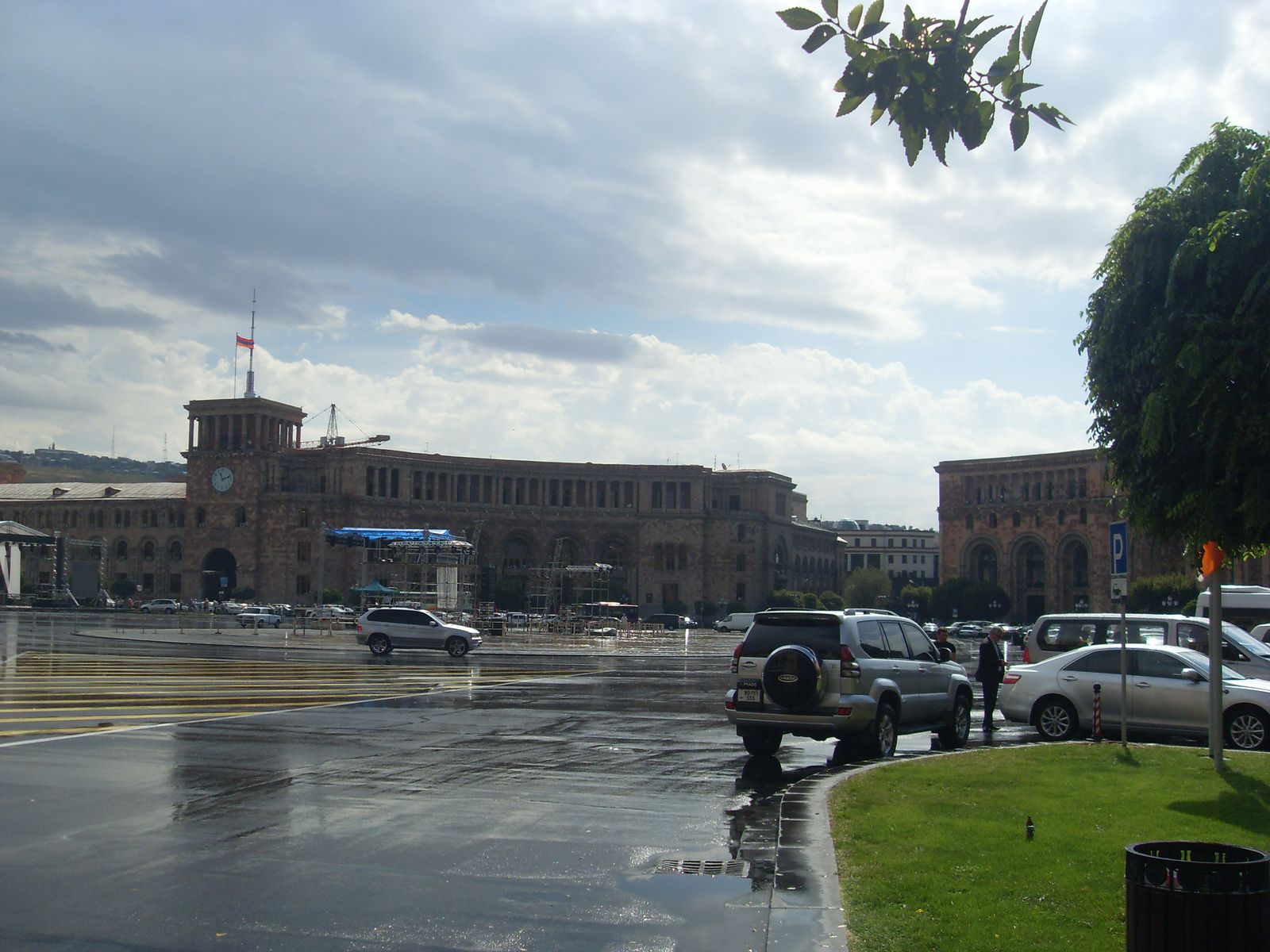
Five neoclassical tuff buildings around an oval, drawn by Alexander Tamanyan in 1924 and finished in stages to 1958. The paving at the centre is laid as a giant Armenian carpet in tuff and basalt. The fountains were converted to synchronised colour and music in 1970 and rebuilt in 2007; they run on summer evenings.
- Region
- Yerevan
- From Yerevan
- City centre
The Cascade & Cafesjian Center
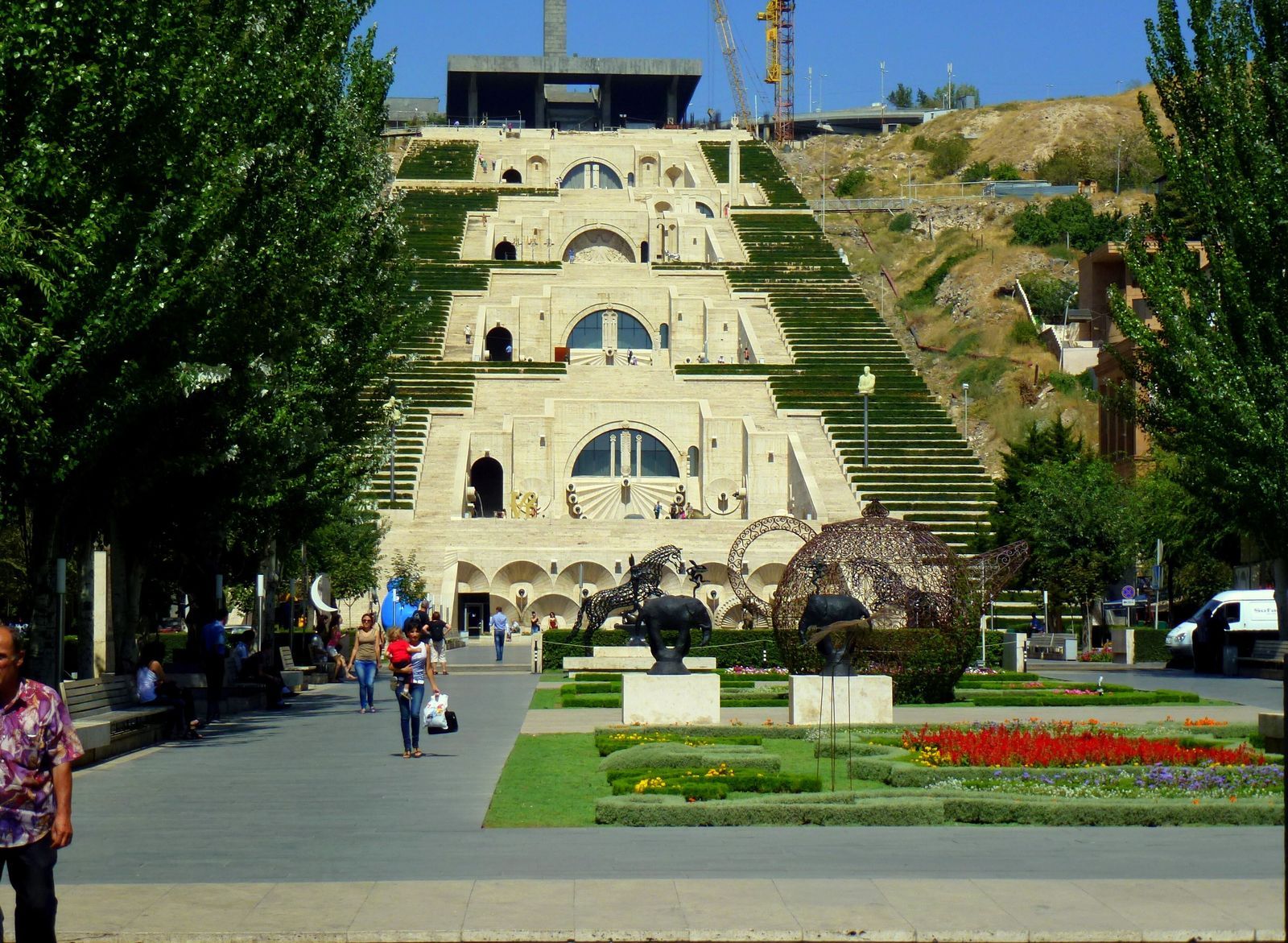
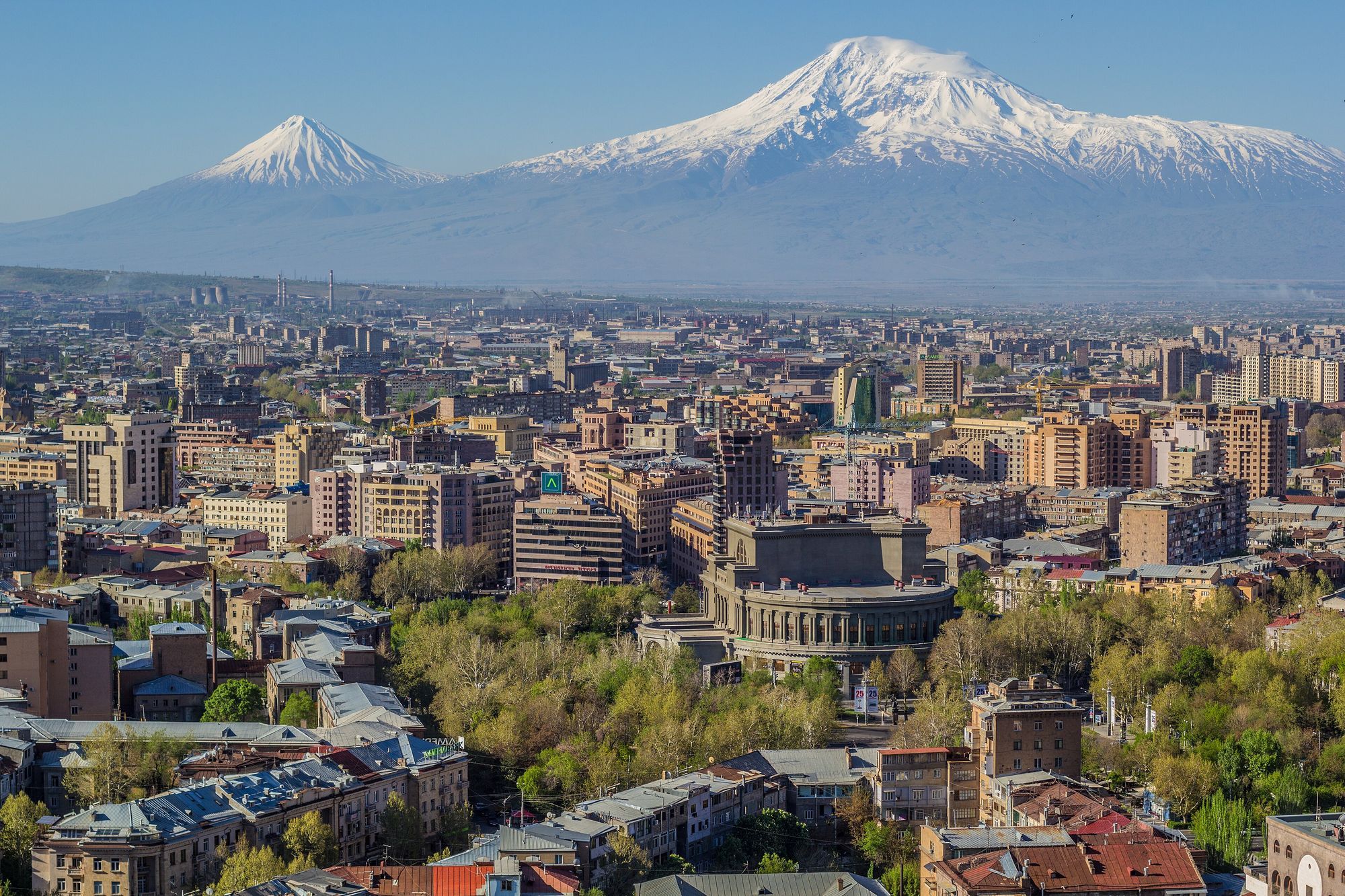
Over 570 steps climbing the hillside, begun in 1971, abandoned after the 1988 earthquake, and revived from 2002 with funding from Gerard Cafesjian. Botero, Chadwick, Plensa and Flanagan sculpture on the terraces. From the top on a clear morning, Ararat floats above the roofline with no visible base.
- Region
- Yerevan
- From Yerevan
- City centre
Matenadaran
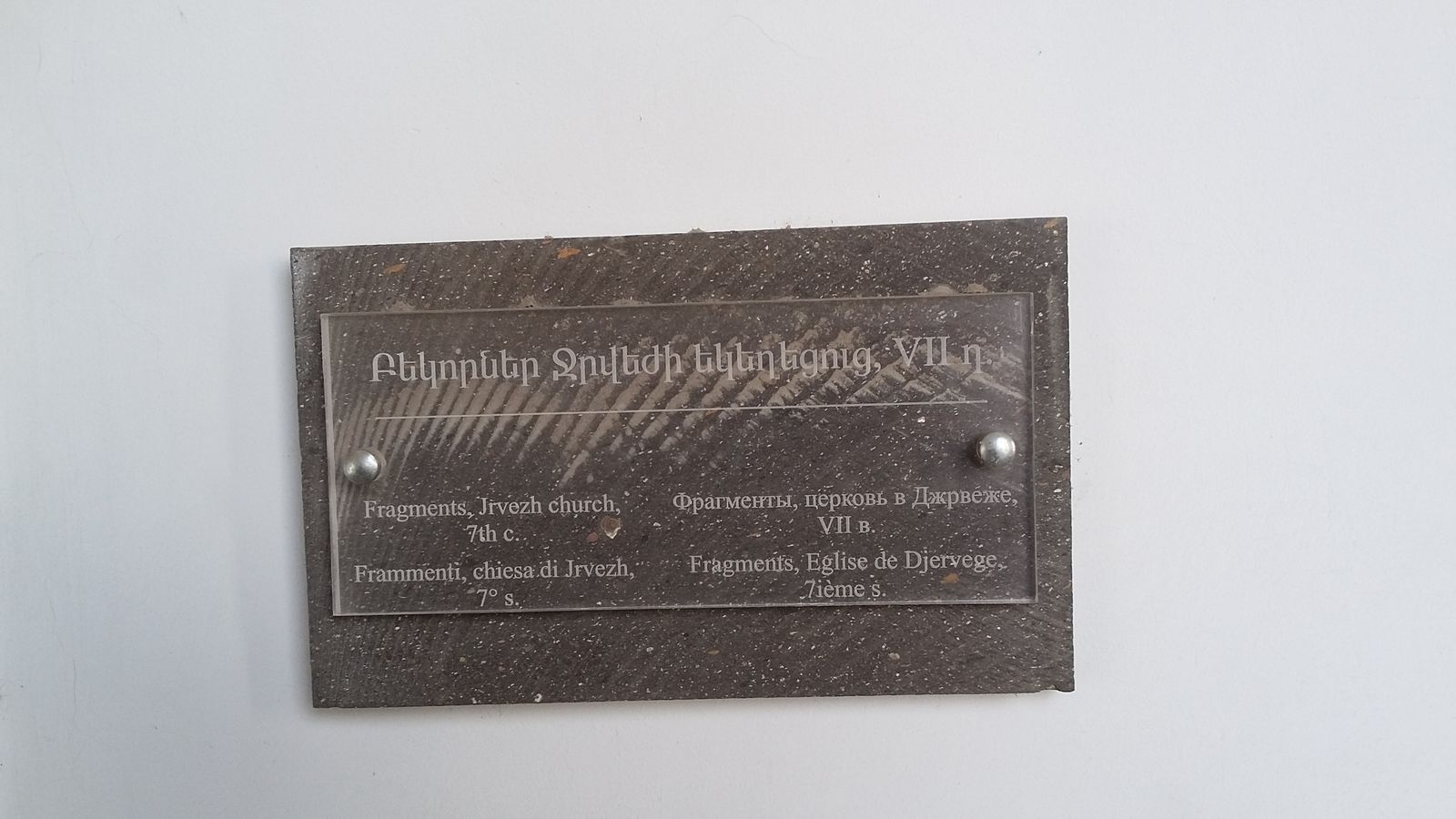
The institute of ancient manuscripts, holding some 17,000 at the time of its UNESCO listing and around 20,000 today. The Homilies of Mush, the largest surviving Armenian manuscript at about 28 kilograms, is displayed in two halves — because two women saved it from the genocide by tearing it apart and carrying half each.
Memory of the World Register, 1997 — documentary heritage, not a World Heritage Site
- Region
- Yerevan
- From Yerevan
- City centre
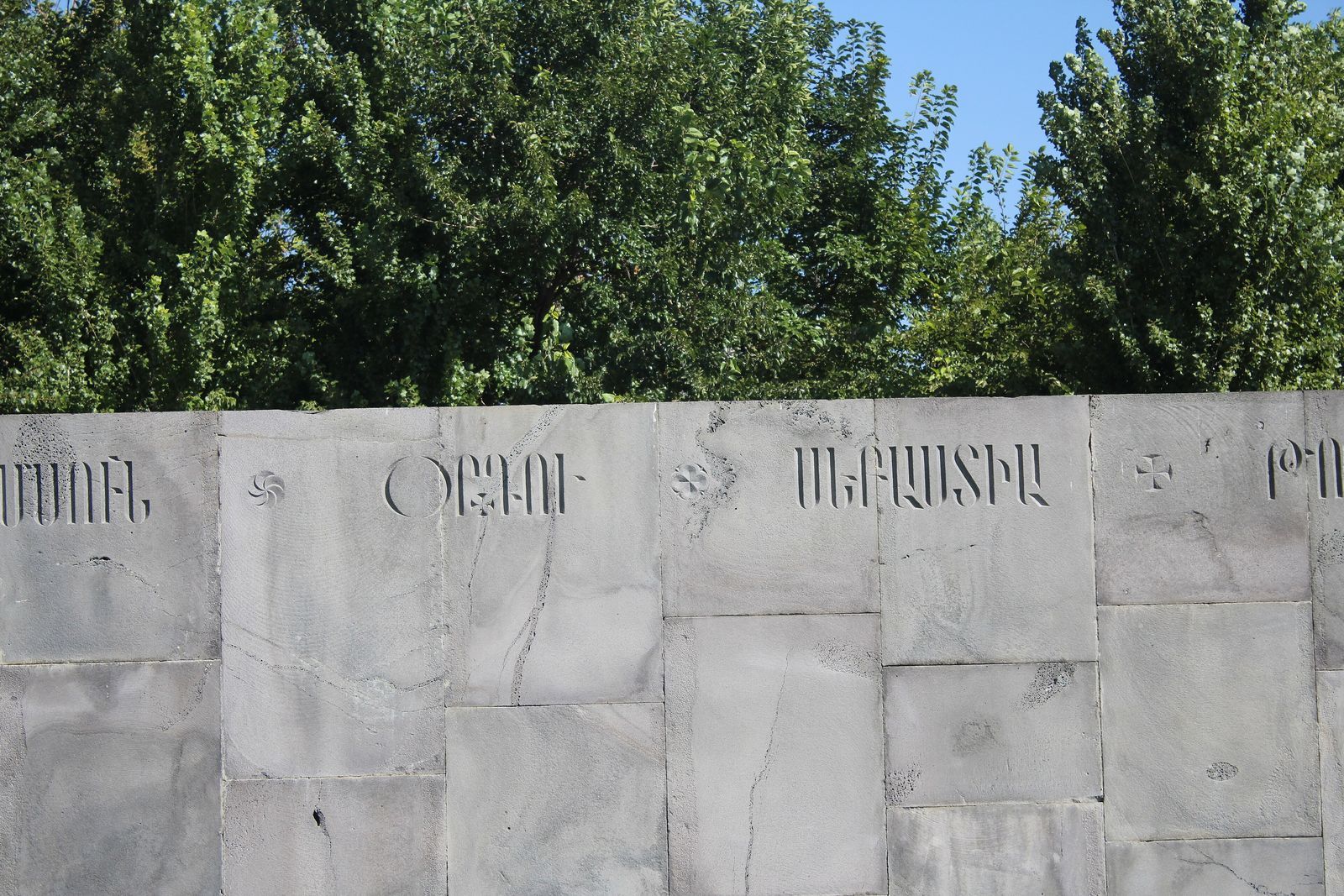
Tsitsernakaberd
The Armenian Genocide memorial, completed in 1967 on a hill above the Hrazdan. A 44-metre stele split by a cleft, and twelve basalt slabs leaning inward around an eternal flame twelve metres below ground level. Duduk plays continuously. On 24 April the flame disappears beneath a metre of flowers.
- Region
- Yerevan
- From Yerevan
- 10 minutes
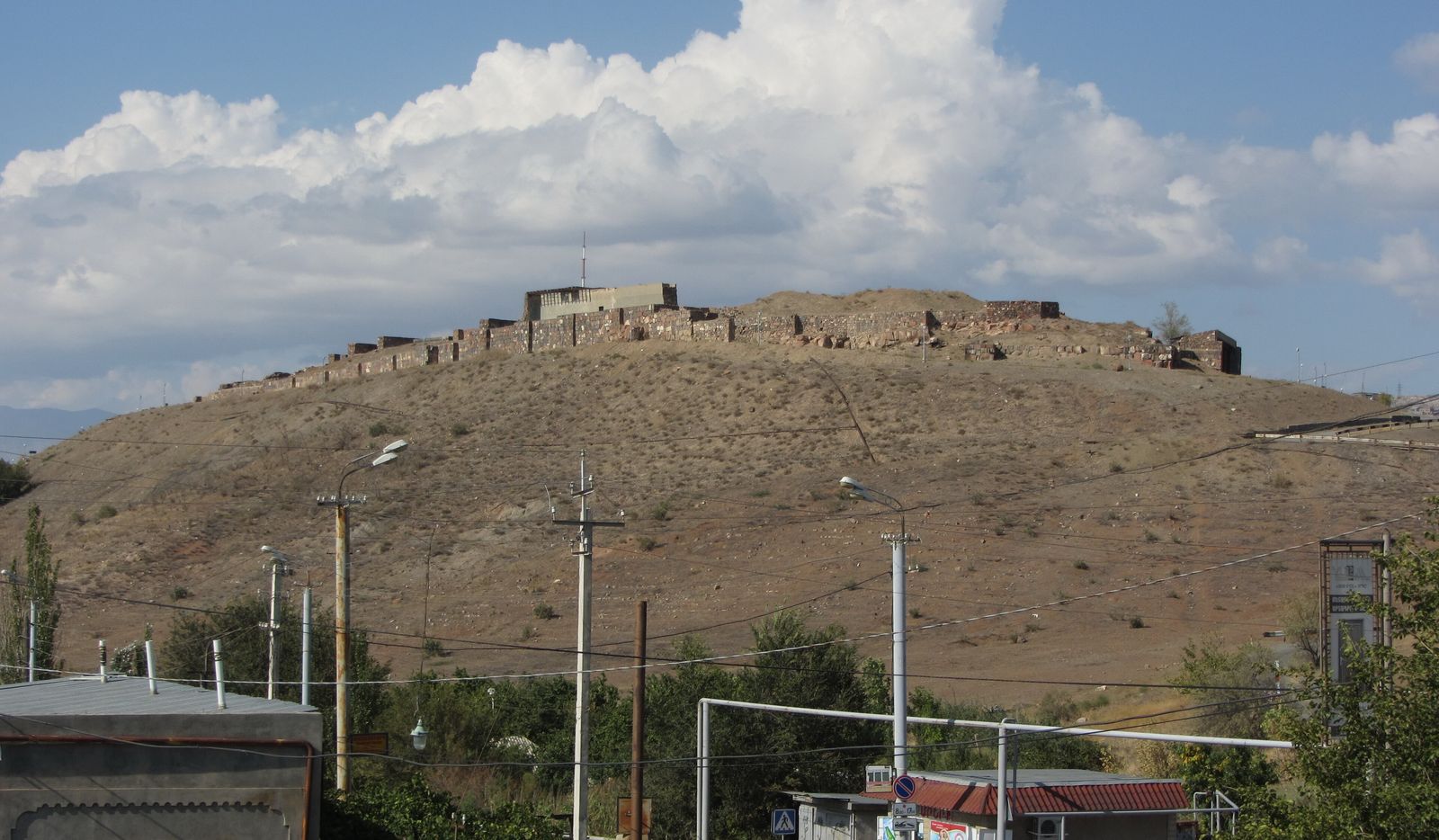
Erebuni Fortress
Yerevan's birth certificate: a cuneiform inscription recording that Argishti I of Urartu built this stronghold in 782 BC. Fragments of red, blue and white Urartian wall painting survive in the Susi temple, still holding their colour after 2,800 years.
Added to Armenia's Tentative List in 2025 as part of "The Urartian Heritage of Yerevan"
- Region
- Yerevan
- From Yerevan
- 20 minutes
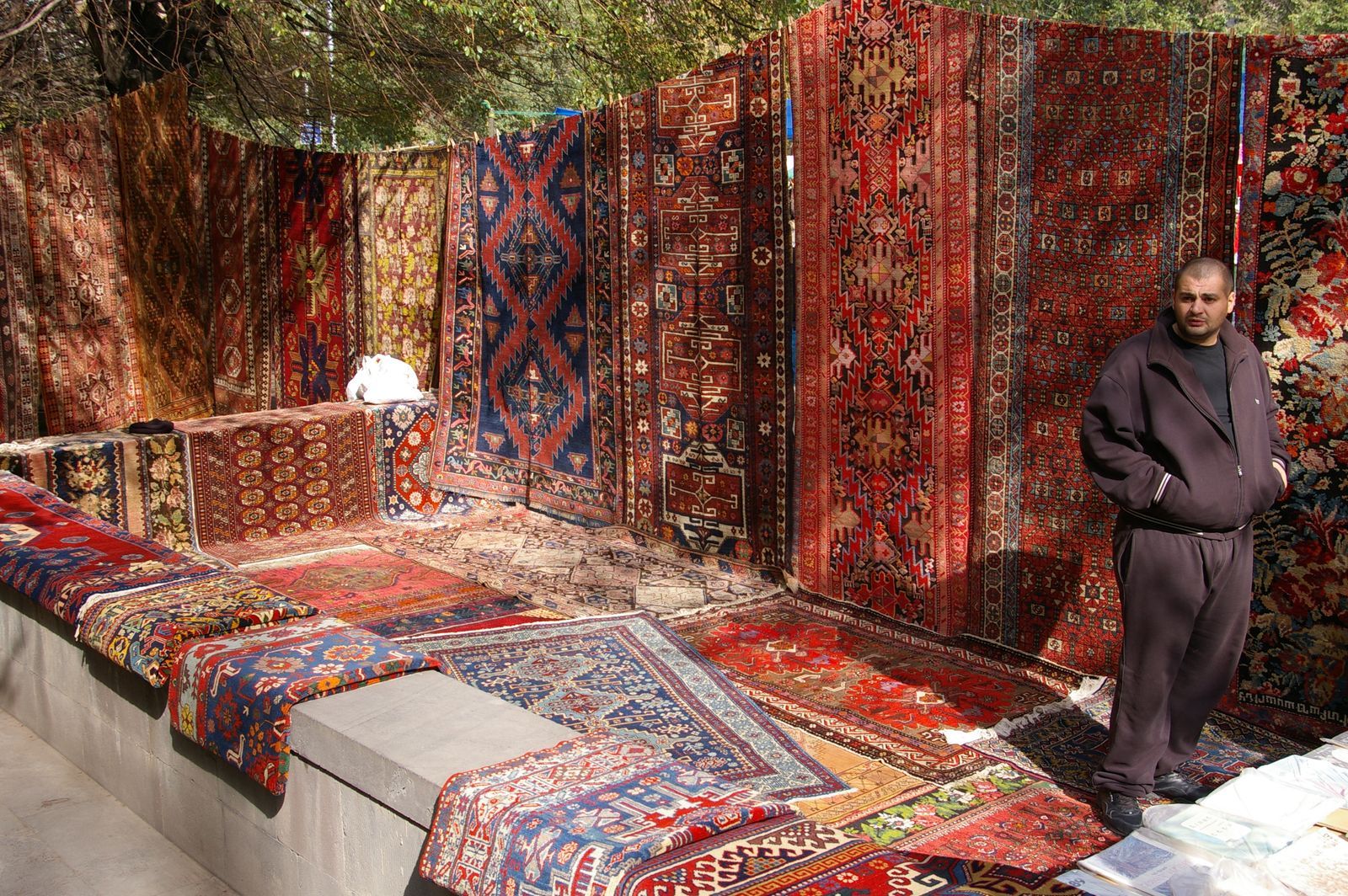
Vernissage & GUM Market
Vernissage grew organically from artists showing work beside the Artists' Union in the 1980s and now runs 350 metres along Aram and Buzand streets — carpets, obsidian, Soviet cameras, duduks carved from apricot wood. GUM Market is where the food is: sujukh hanging like candles, dried fruit, sheep cheese and mulberry syrup. Both are busiest at weekends.
- Region
- Yerevan
- From Yerevan
- City centre
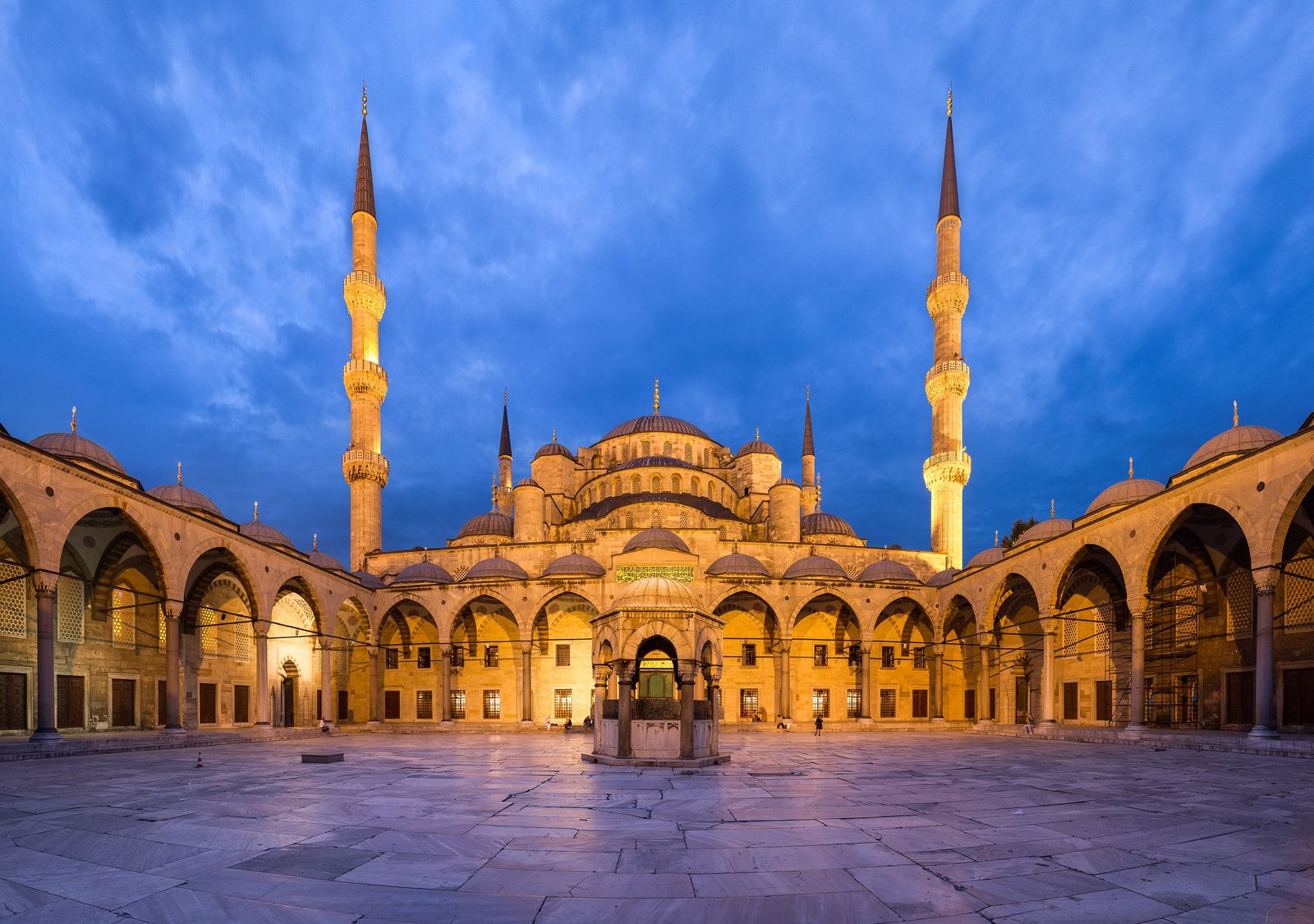
Blue Mosque
Built in 1765–66 under the Erivan Khanate and the only functioning mosque in Armenia today. Step in from Mashtots Avenue and the traffic vanishes — a walled garden of pomegranate trees and a still pool, with a turquoise dome above.
- Region
- Yerevan
- From Yerevan
- City centre
Ararat & Vayots Dzor
5 placesThe plain where Armenia became Christian, and the gorge country south of it where wine has been made for six thousand years.
Khor Virap
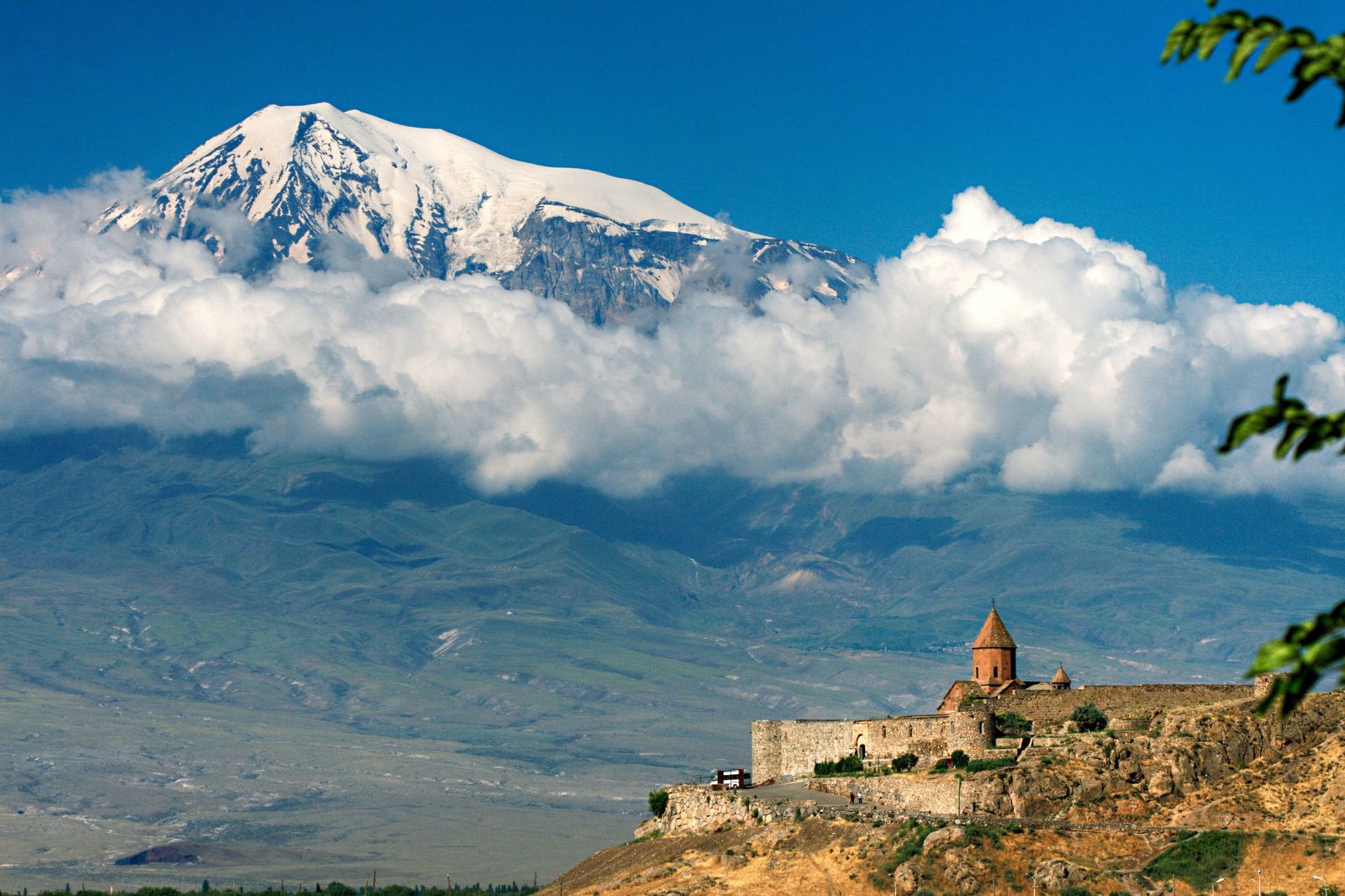
A fortified monastery on a low hill about a hundred metres from a closed border. Beneath it is the pit where Gregory the Illuminator was held for thirteen years by King Trdat III, before converting him and making Armenia the first state to adopt Christianity. The church above dates from 1662. It is also the best place in the country to see Mount Ararat.
Frequently and wrongly listed as UNESCO in tour marketing. It has no such status.
- Region
- Ararat & Vayots Dzor
- From Yerevan
- 45 minutes
Noravank
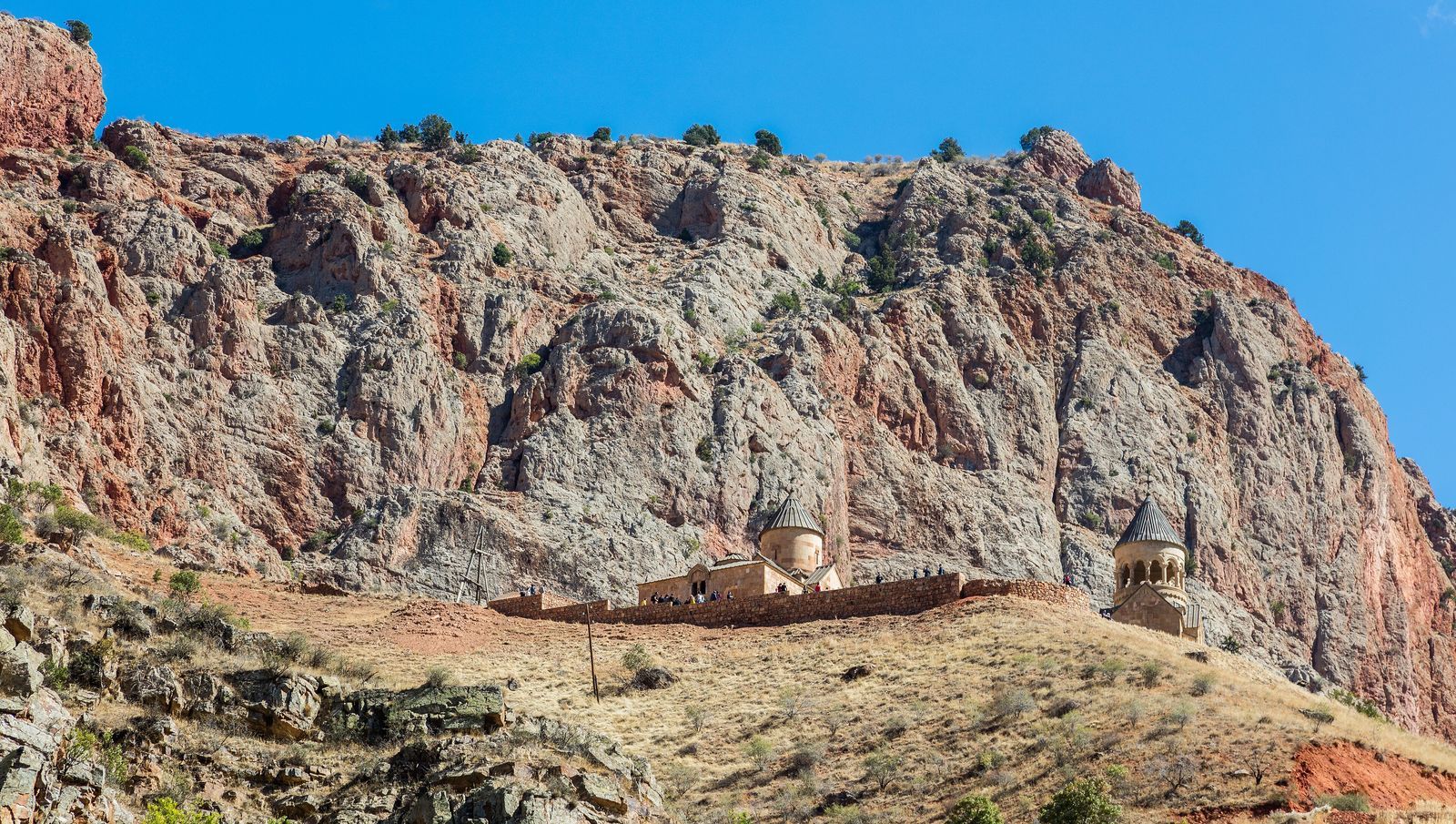
At the head of a narrow gorge of brick-red limestone, a monastery the same colour as the cliffs. The Surb Astvatsatsin church of 1339 carries the work of Momik — sculptor, architect and illuminator — and is reached by a narrow cantilevered stone stair running up the façade with nothing on the outer side.
- Region
- Ararat & Vayots Dzor
- From Yerevan
- 2 hours
Areni & the Areni-1 cave
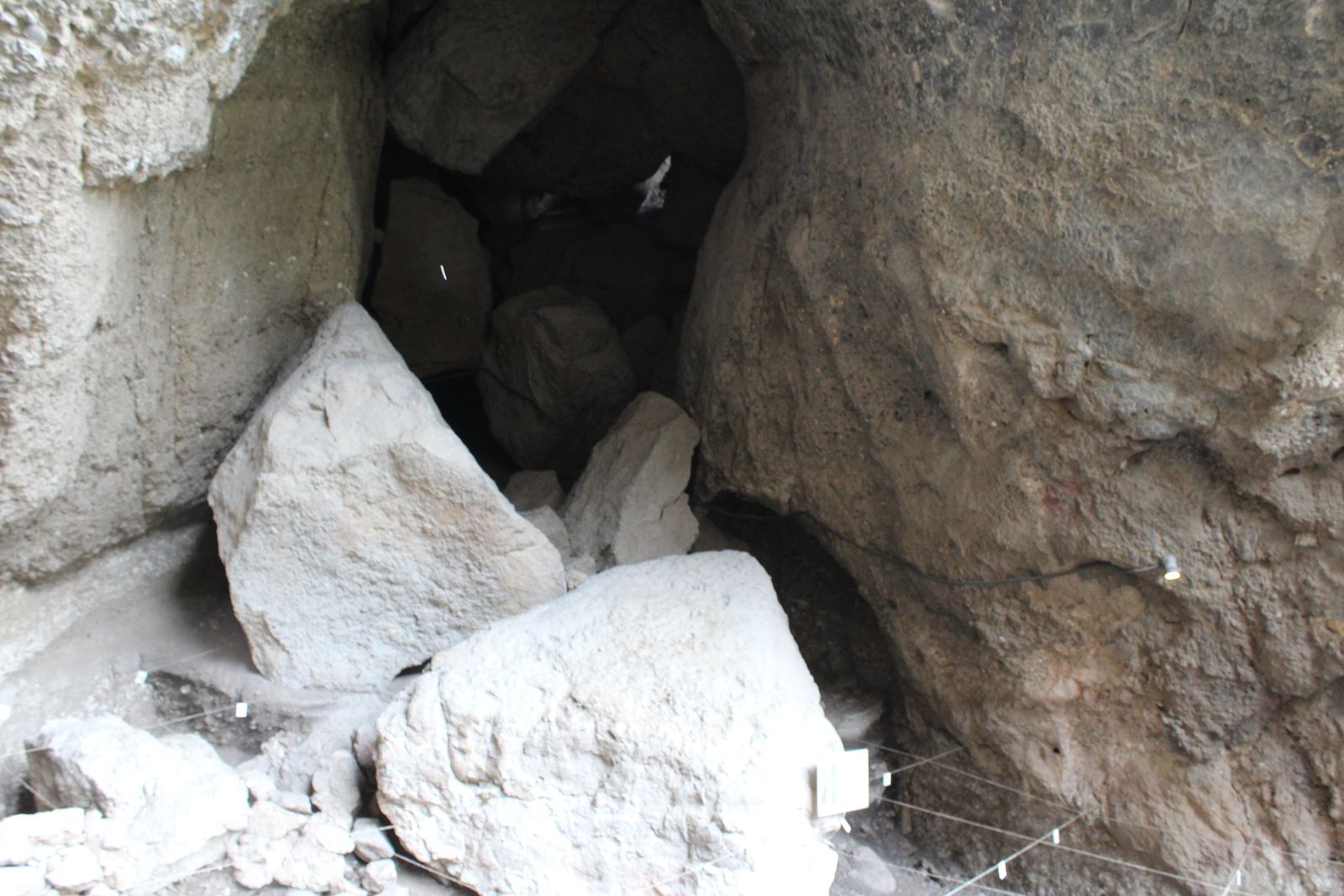
The cave produced the world's oldest known leather shoe, about 3500 BC — a size 37, stuffed with grass, preserved under sheep dung — and the world's oldest known winery, roughly 6,100 years old: a clay press, fermentation vats and grape seeds. The valley around it is now the centre of Armenian wine, working with Areni Noir and the white Voskehat.
- Region
- Ararat & Vayots Dzor
- From Yerevan
- 1 hour 50
Selim Caravanserai
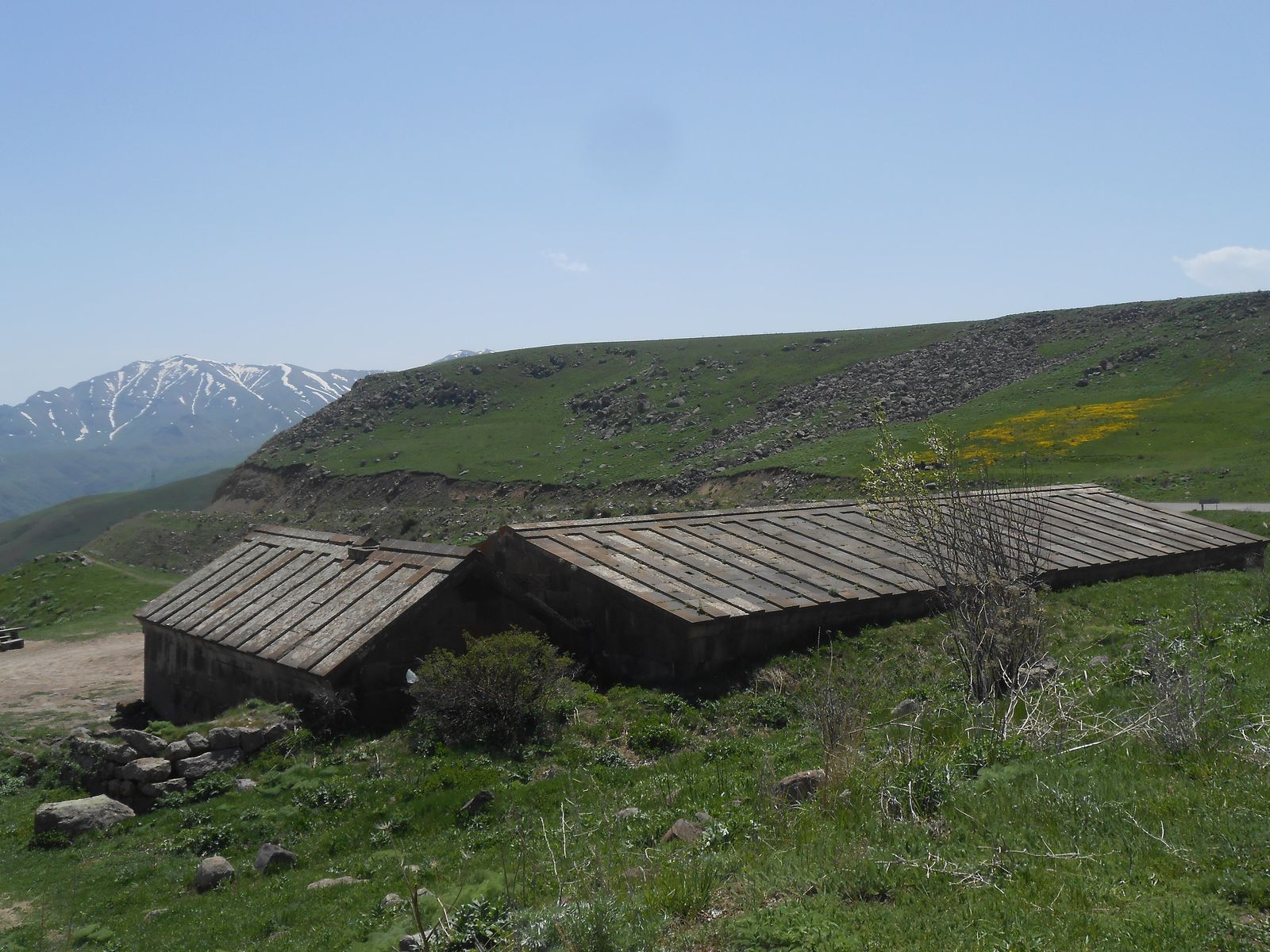
On the Vardenyats pass at 2,410 metres, built in 1332 by Prince Chesar Orbelian. One basalt hall in three naves with seven pairs of pillars and oculi for light and smoke. The inscriptions are in Armenian, Persian and Arabic. Snowbound in winter.
- Region
- Ararat & Vayots Dzor
- From Yerevan
- 2 hours 15
Jermuk
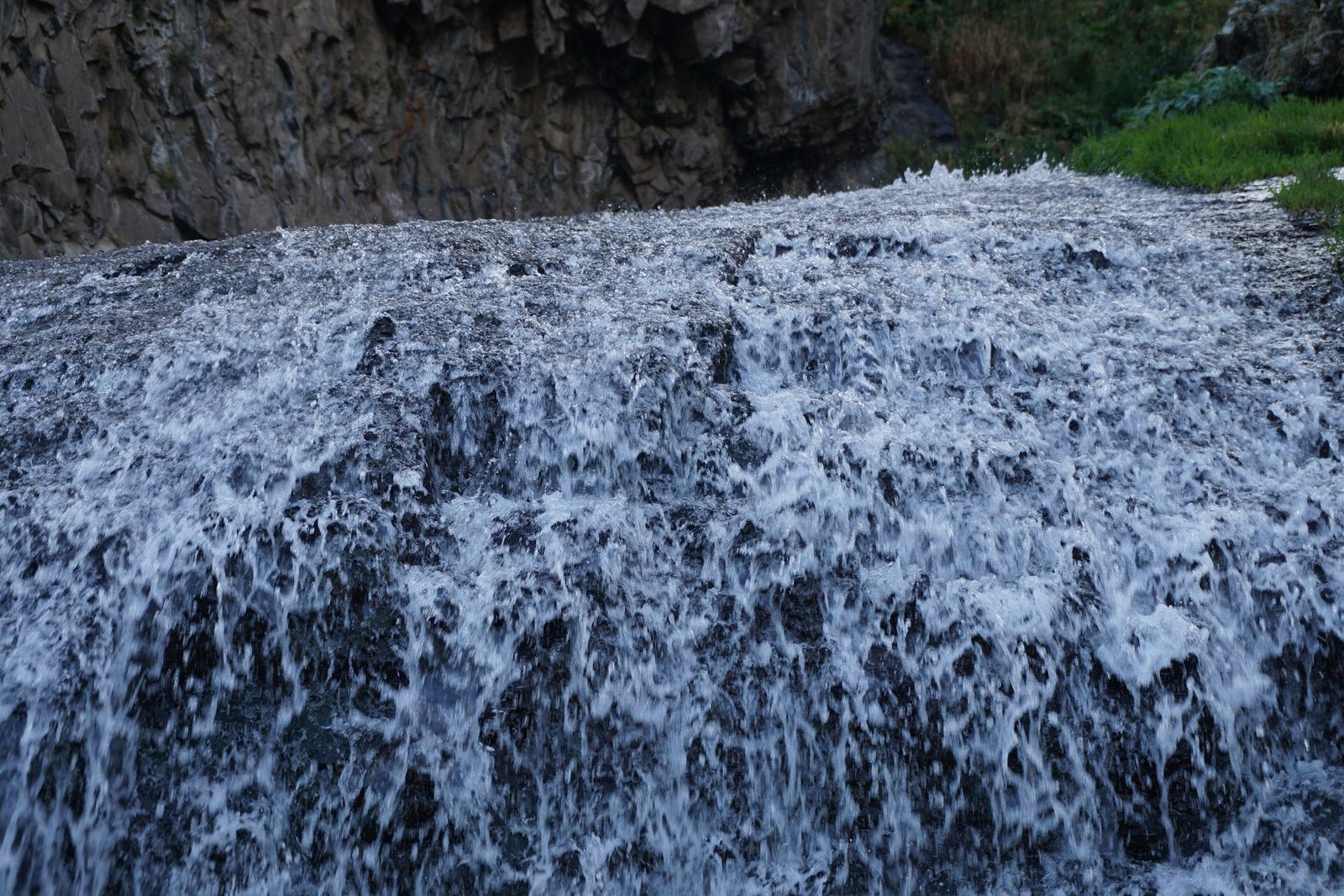
A spa town at about 2,080 metres built around hot mineral springs, whose water is Armenia's best-known export brand. A drinking gallery pours from a row of taps at different temperatures, and a seventy-metre waterfall called the Mermaid's Hair falls below the town.
- Region
- Ararat & Vayots Dzor
- From Yerevan
- 3 hours
Kotayk
4 placesHalf an hour east of Yerevan the Azat river has cut a gorge through basalt, and two of Armenia's most extraordinary buildings stand at either end of it.
Garni Temple
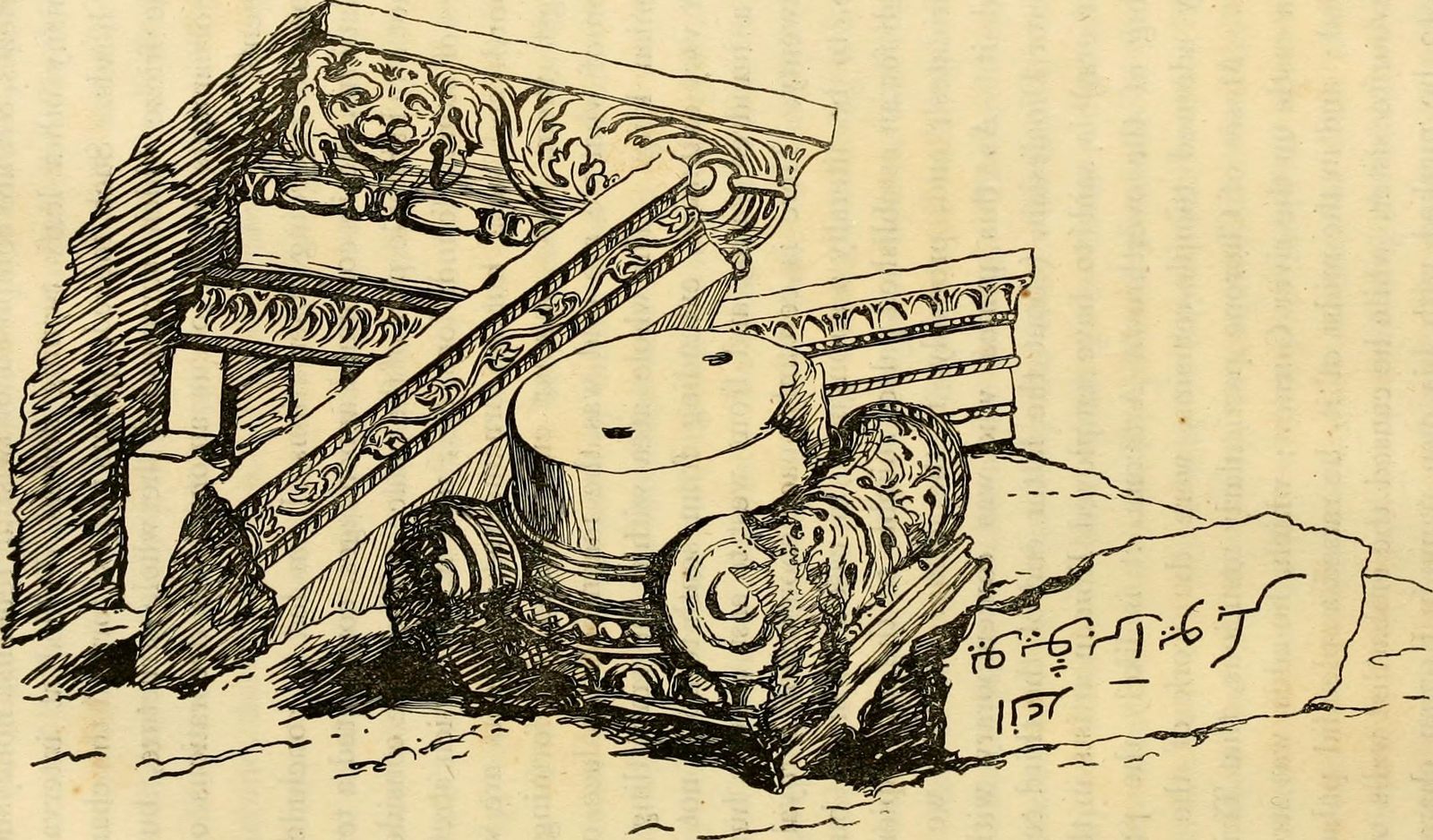
Twenty-four Ionic columns on a promontory at 1,400 metres, built in the first century AD and usually identified as a temple to the sun god Mihr, though some scholars read it as a royal tomb. The only standing Greco-Roman colonnaded building in Armenia. The basalt is grey-blue, not marble, so after rain it goes almost black. It fell in 1679 and was re-erected from its own stones between 1969 and 1975.
Added to Armenia's Tentative List in 2025. Not inscribed.
- Region
- Kotayk
- From Yerevan
- 40 minutes
Geghard Monastery
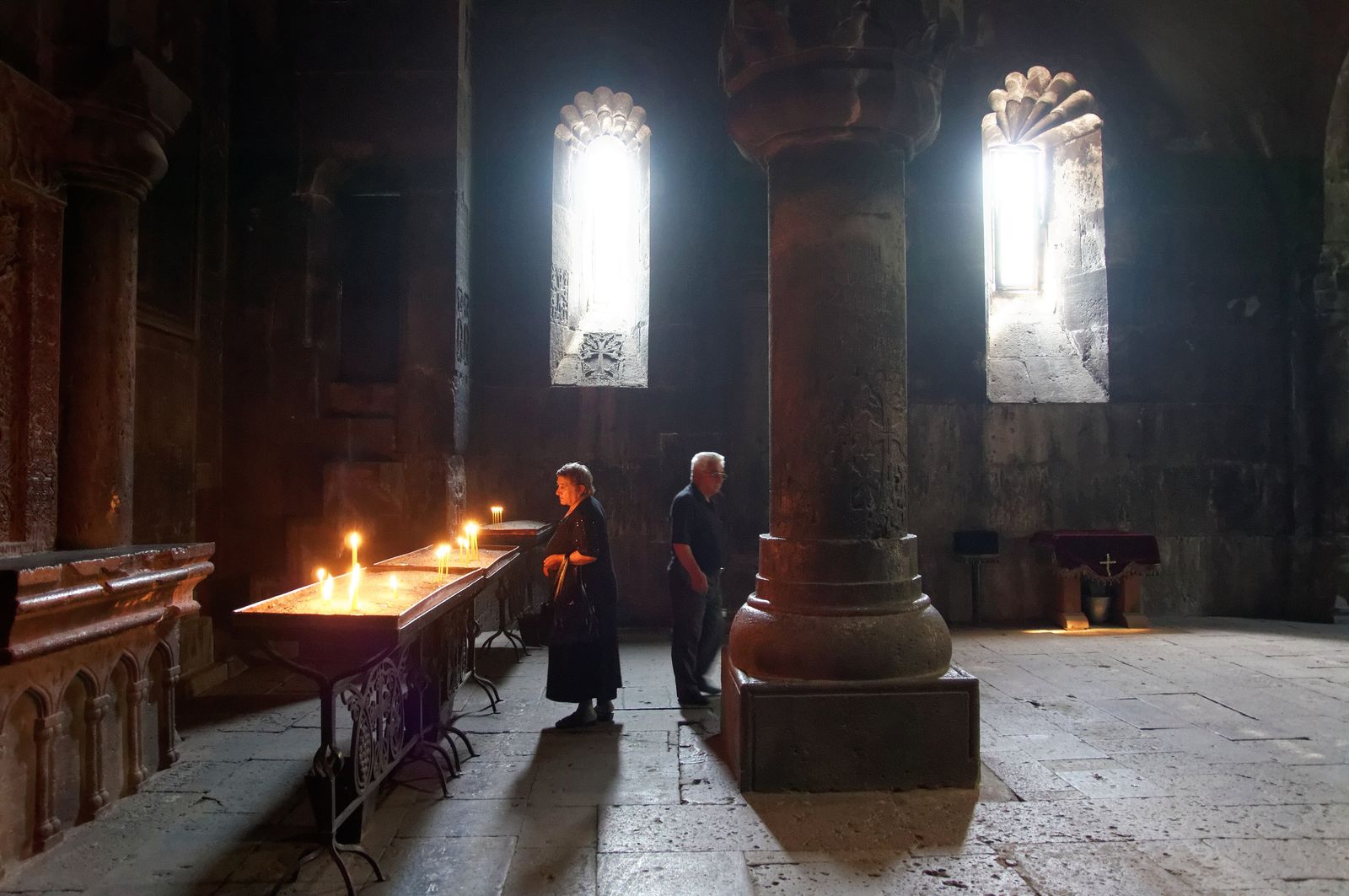
Originally Ayrivank, "the monastery of the cave". Half of it is built and half carved downward into the rock from a single opening — no joints, one continuous stone. The main church dates to 1215; the rock-cut churches to the 1240s–1280s. A spring still runs out of the rock inside the Avazan chapel. Sing a note under the dome and it holds for seconds.
World Heritage, 2000 — "Monastery of Geghard and the Upper Azat Valley"
- Region
- Kotayk
- From Yerevan
- 50 minutes
Symphony of Stones
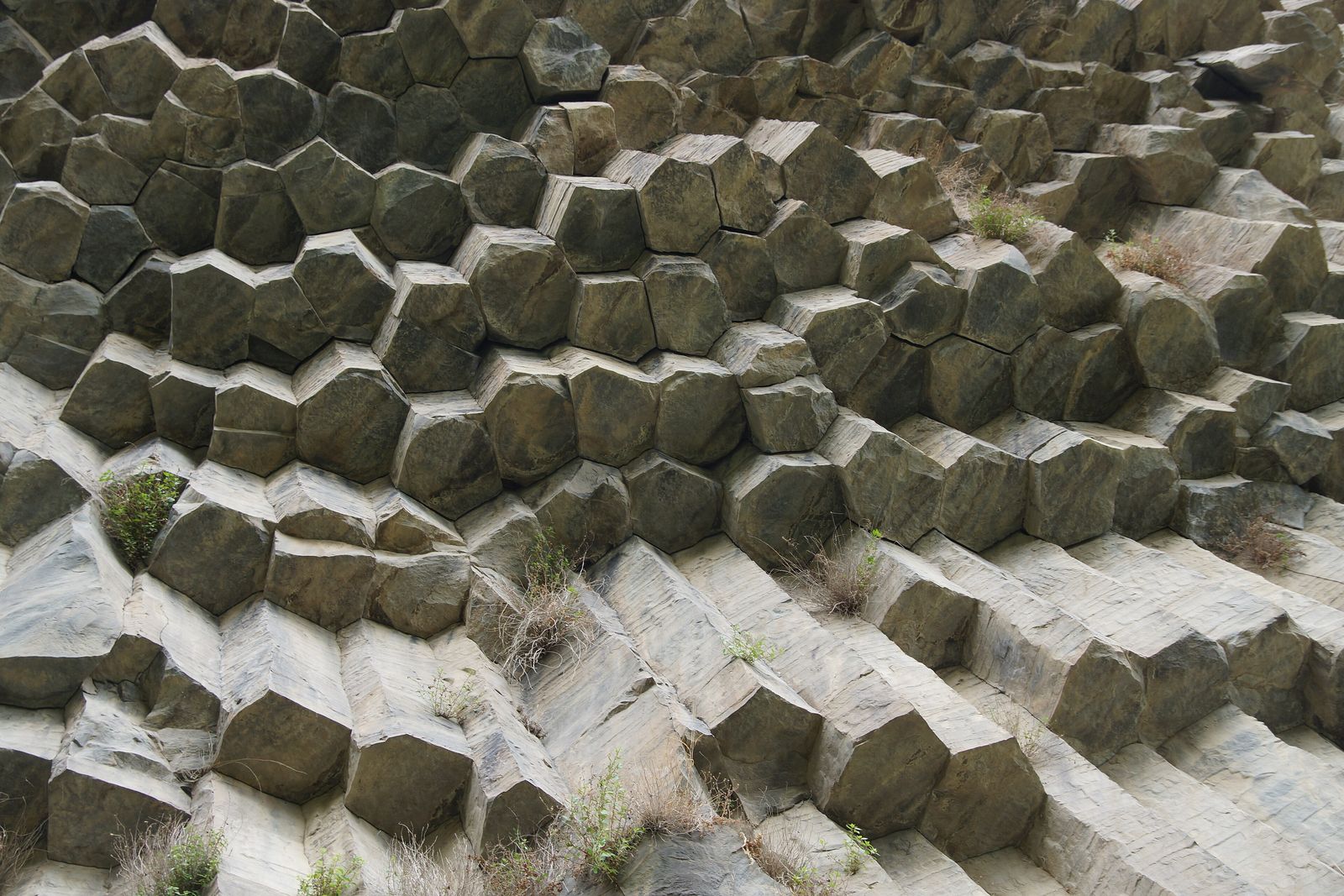
In the gorge below Garni: cliff walls of near-perfect hexagonal columnar basalt, formed as a lava flow cooled evenly and later exposed by the river. They hang overhead in ranked bundles like organ pipes tipped on their side, some fanned into rosettes.
- Region
- Kotayk
- From Yerevan
- 45 minutes
Tsaghkadzor
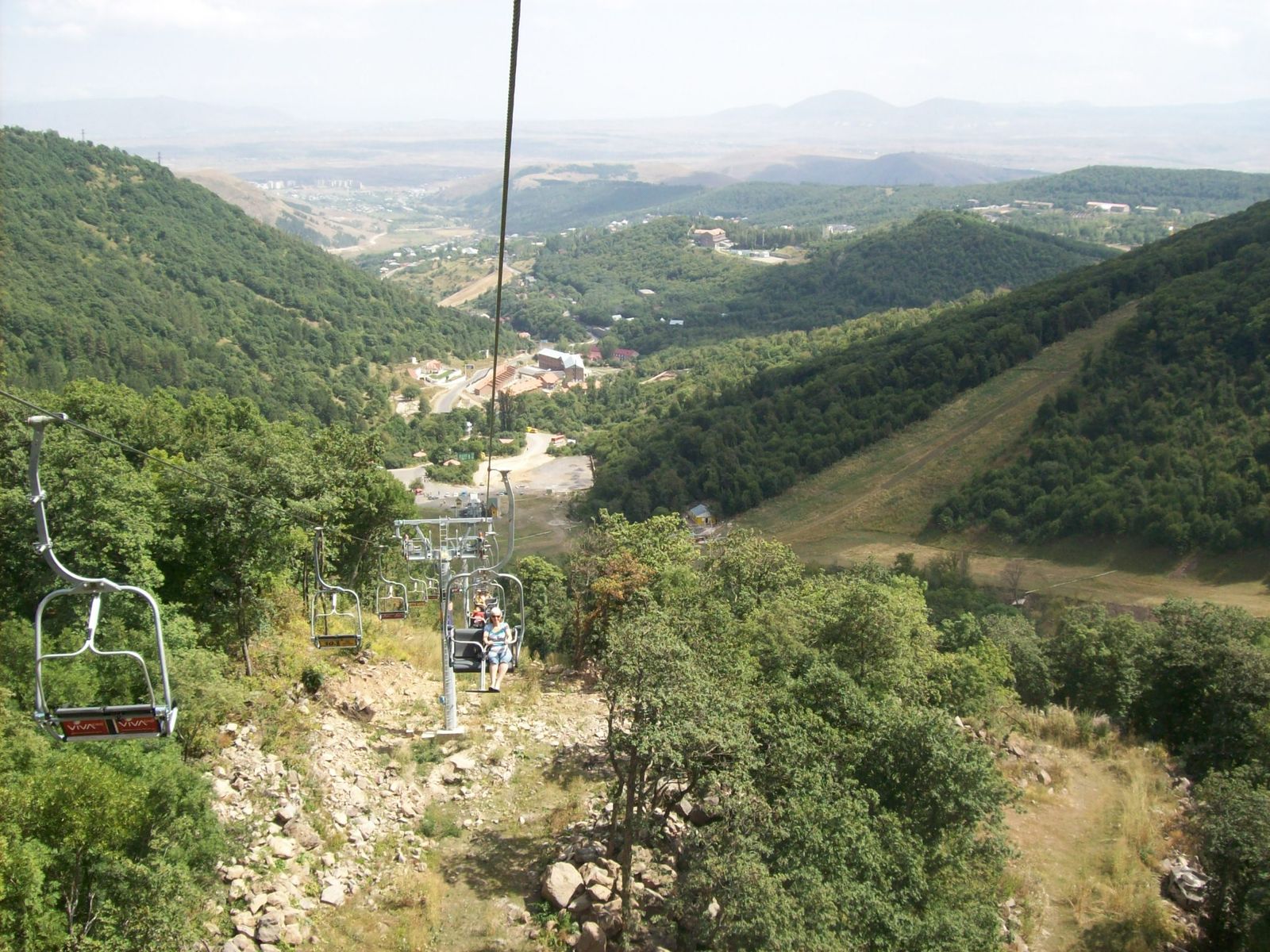
Armenia's main ski resort at 1,841 metres, with a gondola in four stages to a top station at 2,819 and 850 metres of vertical. The Olympic complex opened in 1967 specifically to acclimatise Soviet athletes for Mexico City. Kecharis Monastery, four churches founded in the early eleventh century, sits in the town below.
- Region
- Kotayk
- From Yerevan
- 1 hour
Armavir & Aragatsotn
6 placesWest of Yerevan lies the spiritual centre of the Armenian church; north of it, the four-peaked volcano that is the highest ground in the country.
Echmiadzin Cathedral
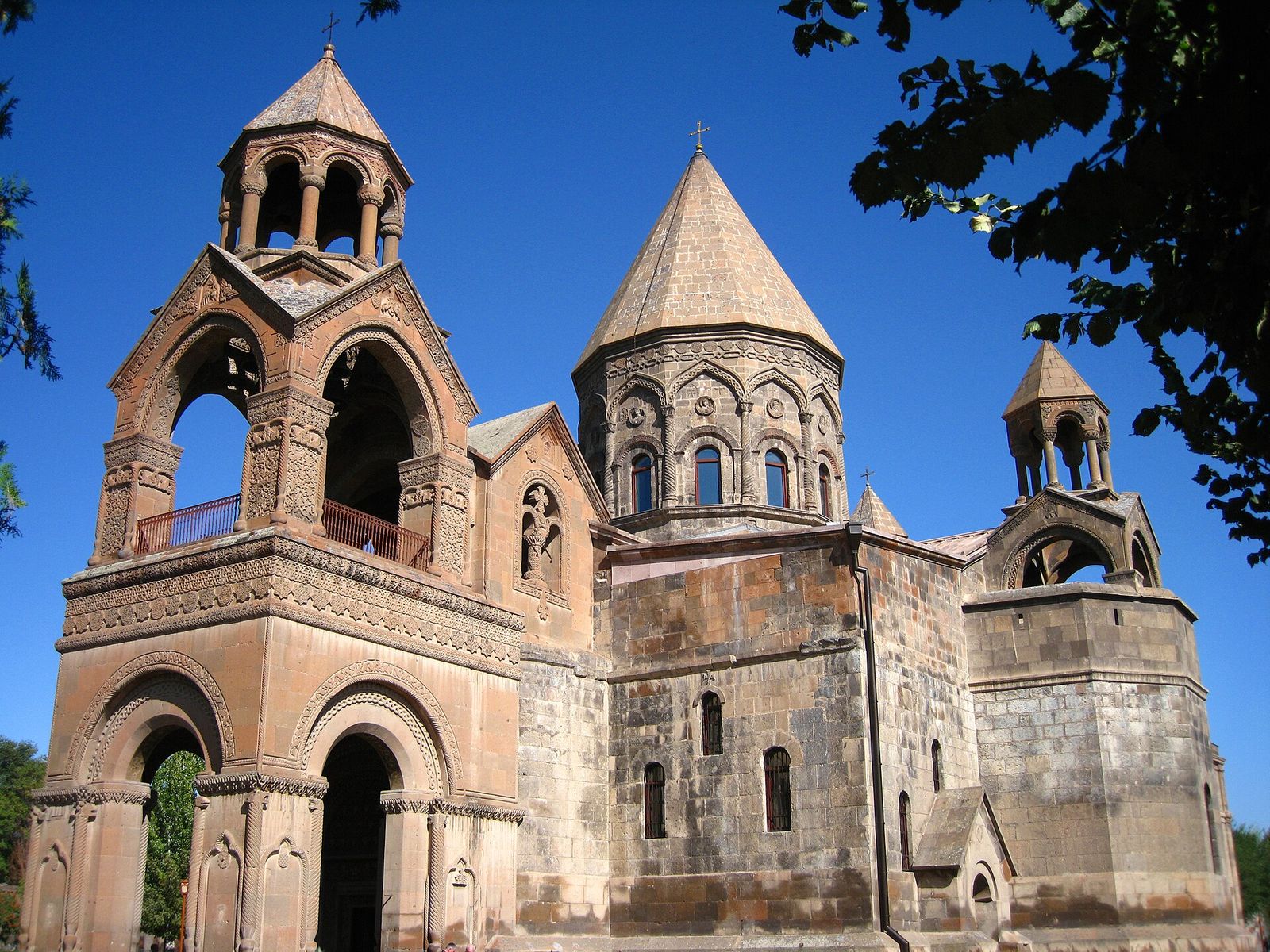
The mother church of the Armenian Apostolic Church and seat of the Catholicos. Traditionally founded 301–303, and widely regarded as the oldest cathedral in the world — though the fabric standing today is largely the 5th-century rebuilding. Under the main altar, a glass panel looks down into the excavated fire altar of the pagan temple it replaced. The treasury holds the Holy Lance.
World Heritage, 2000 — "Cathedral and Churches of Echmiatsin and the Archaeological Site of Zvartnots"
- Region
- Armavir & Aragatsotn
- From Yerevan
- 30 minutes
Zvartnots
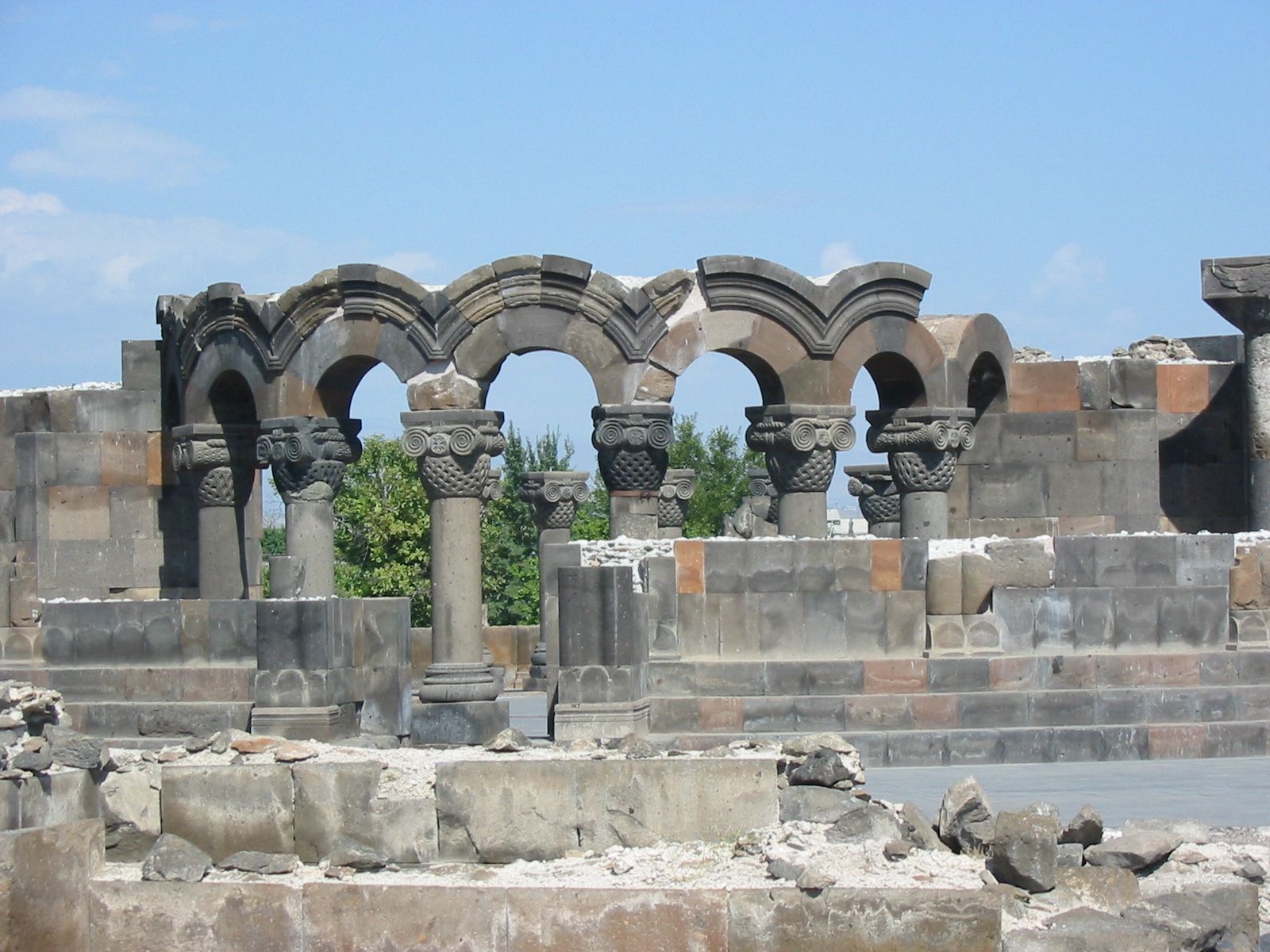
Begun in 643, consecrated in 652: a three-tiered rotunda 45 metres high, the largest aisled tetraconch in historical Armenia. It stood about three centuries before collapsing in the tenth century, most probably in an earthquake, and was excavated from 1900. One reconstructed arcade stands on the plain, capitals carved with eagles, and Ararat rises directly behind it.
- Region
- Armavir & Aragatsotn
- From Yerevan
- 20 minutes
Amberd Fortress
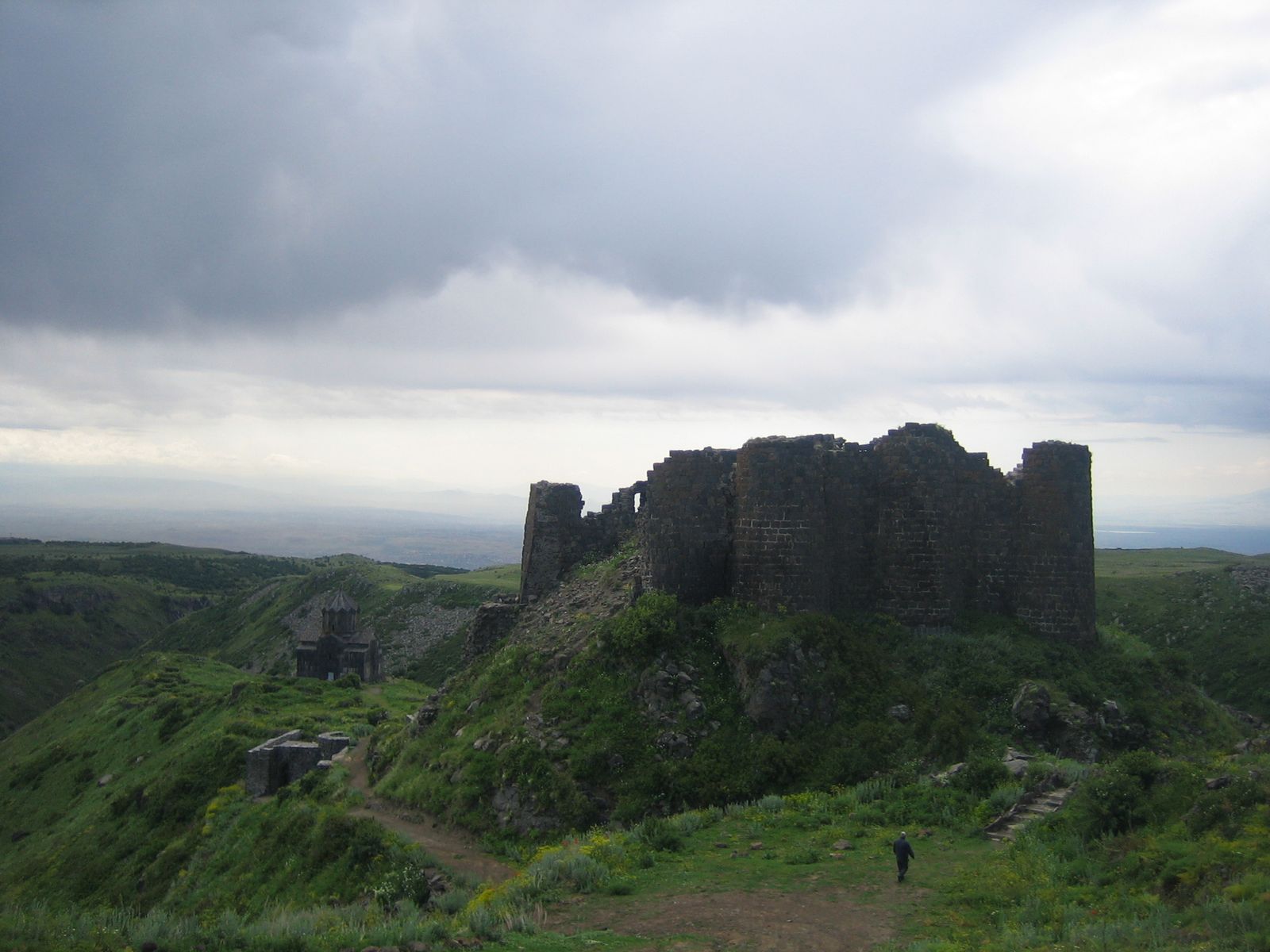
"Fortress in the clouds", on a spur between two gorges at 2,300 metres. Seventh-century walls thickened by the Pahlavuni princes, a church of 1026, a bathhouse with Roman-style under-floor heating and a four-kilometre terracotta pipeline from mountain springs. The Mongols destroyed it in 1236.
Named one of Europe's 7 Most Endangered sites in 2024 — by Europa Nostra, not UNESCO
- Region
- Armavir & Aragatsotn
- From Yerevan
- 1 hour 20
Mount Aragats & Kari Lake
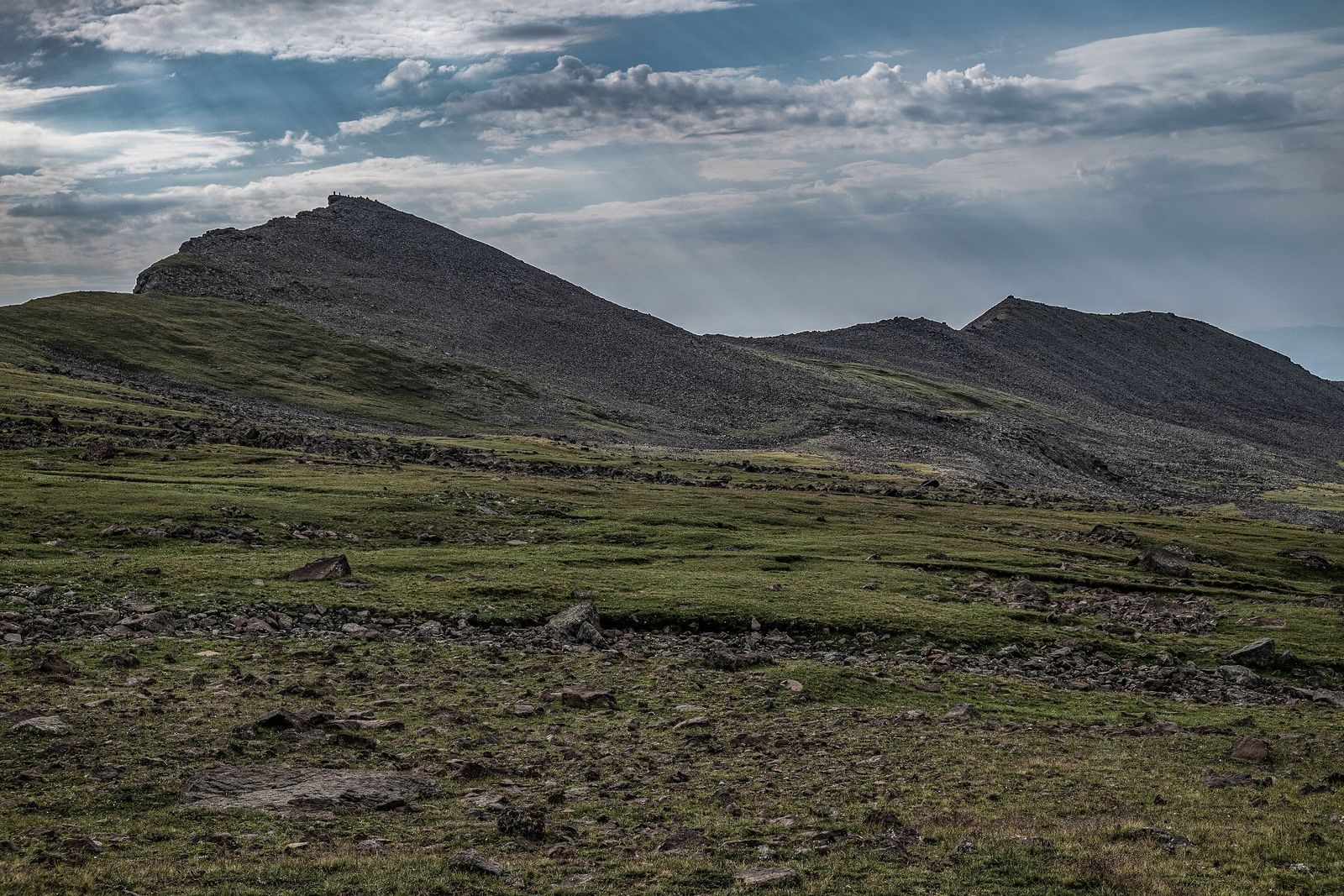
A four-peaked volcanic massif; the northern summit at 4,090 metres is the highest point in Armenia. The road climbs to Kari Lake at about 3,190 metres, a glacial lake frozen eight or nine months of the year, ringed by black scree. The huts on the shore are a cosmic-ray research station that has recorded continuously since 1943.
- Region
- Armavir & Aragatsotn
- From Yerevan
- 1 hour 45
Saghmosavank & Hovhannavank
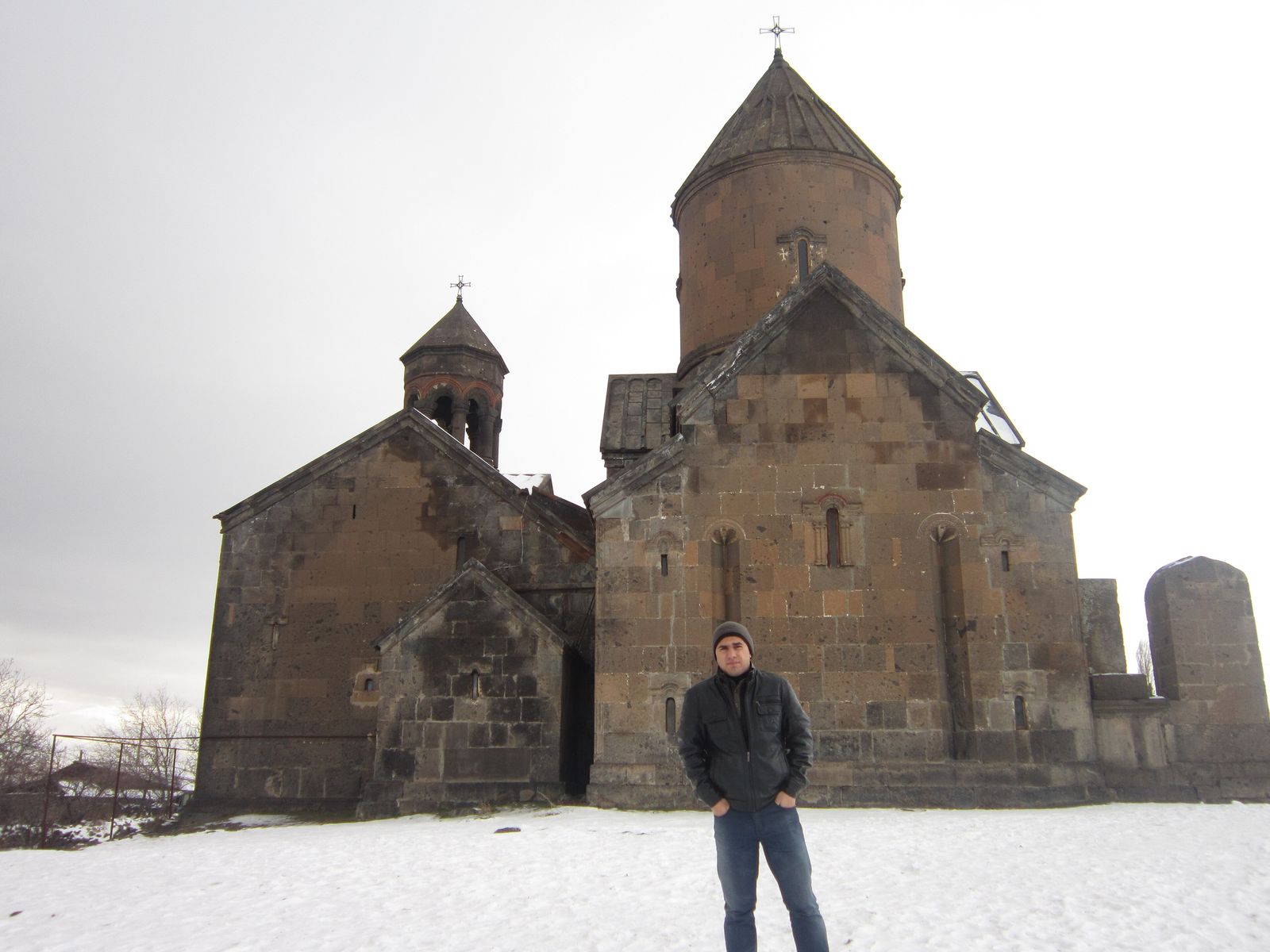
Two monasteries on the rim of the Kasagh gorge. Saghmosavank's church was built in 1215 by Prince Vache Vachutian, and its mid-1250s book depository is among the earliest purpose-built manuscript libraries in Armenian architecture. At Hovhannavank, five wise and five foolish virgins are carved above the west door — the foolish ones with their lamps upside down.
- Region
- Armavir & Aragatsotn
- From Yerevan
- 45 minutes
The Alphabet Monument
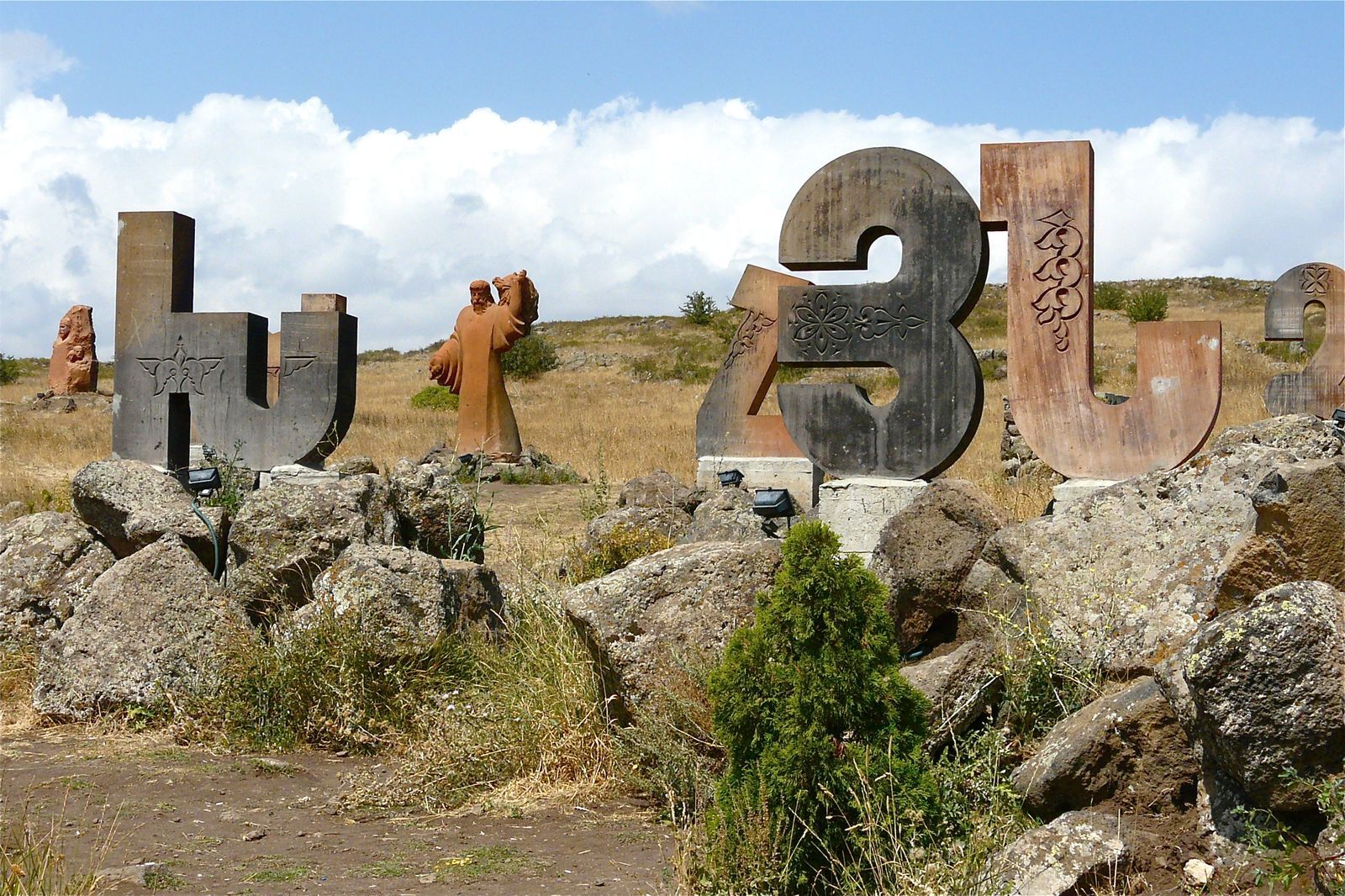
Thirty-nine carved basalt and tufa letters strewn across a hillside at Artashavan, erected in 2005 for the 1,600th anniversary of the alphabet Mesrop Mashtots created around 405. They are not in alphabetical order, so finding your own initial means walking the whole meadow with Aragats at your back.
- Region
- Armavir & Aragatsotn
- From Yerevan
- 1 hour
Lake Sevan & Tavush
5 placesAn alpine sea holding almost all of Armenia's fresh water, and beyond it the only properly forested corner of the country.
Lake Sevan & Sevanavank
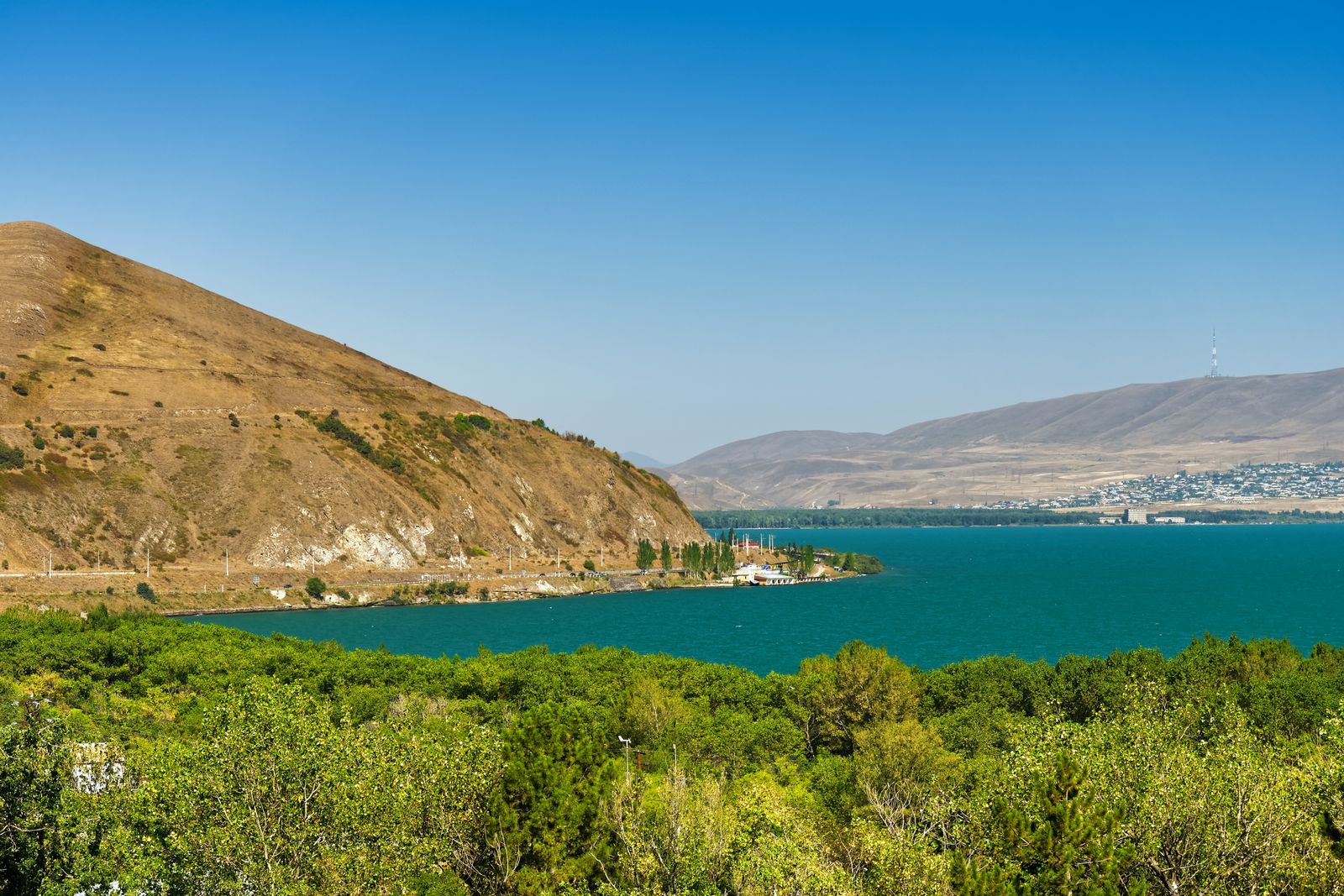
Roughly 1,240 square kilometres of water at 1,900 metres — one of the largest alpine lakes in Eurasia, holding effectively all of Armenia's surface freshwater. Twenty-eight rivers flow in and about ninety per cent of the water leaves as vapour. Sevanavank, founded in 874 by Princess Mariam, stood on an island until Soviet drawdown lowered the lake nearly twenty metres and made it a peninsula.
- Region
- Lake Sevan & Tavush
- From Yerevan
- 1 hour
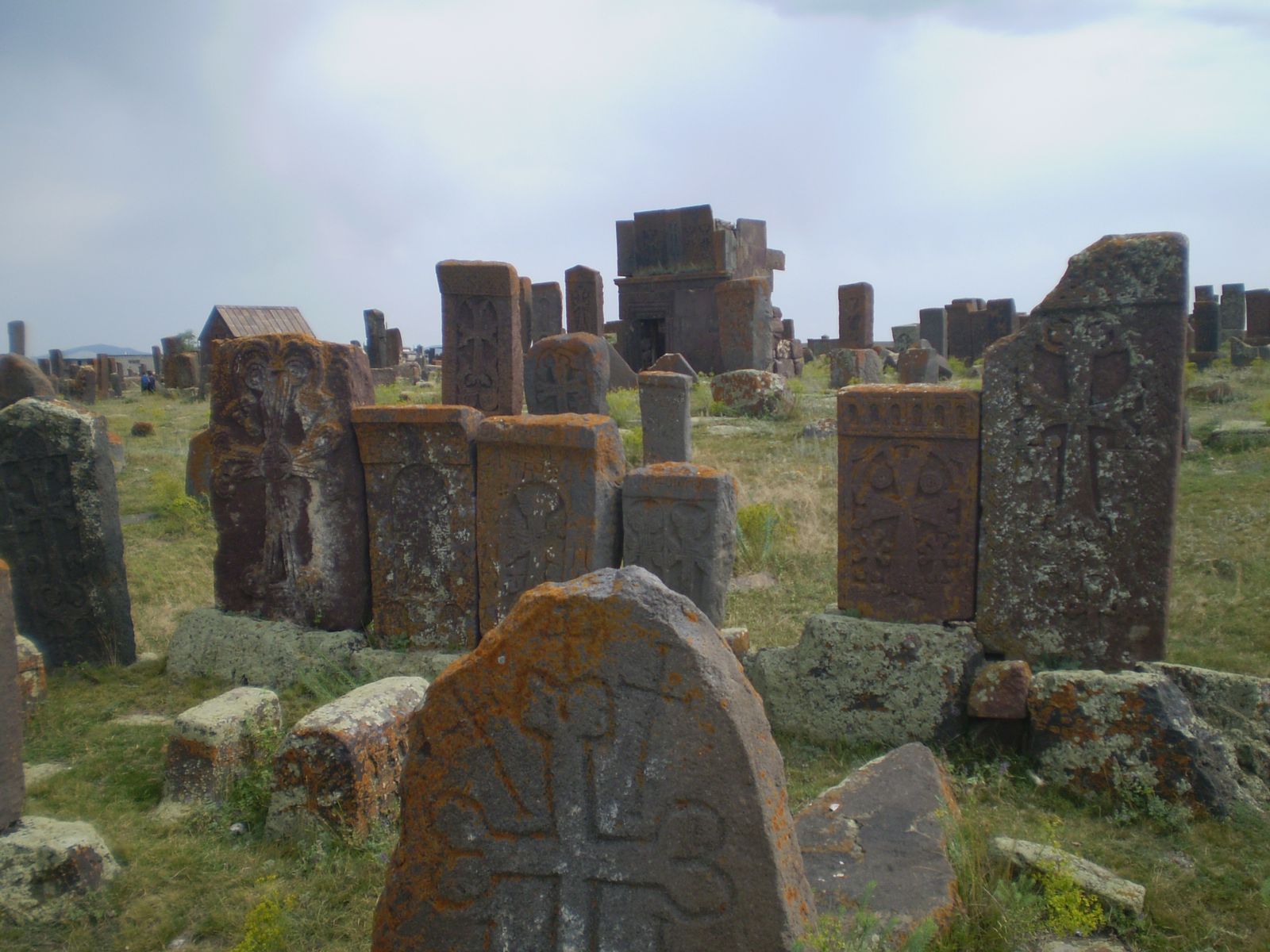
Noratus khachkar field
Seven hectares and almost a thousand carved cross-stones, the oldest from the late tenth century. No two repeat a pattern. It is the largest surviving khachkar field because the far larger one at Julfa in Nakhchivan — some ten thousand stones, recorded in 1648 — was destroyed, the final phase in December 2005.
The craft of khachkar carving was inscribed in 2010. That listing covers the craft nationally — Noratus itself is not a UNESCO site.
- Region
- Lake Sevan & Tavush
- From Yerevan
- 1 hour 30
Dilijan
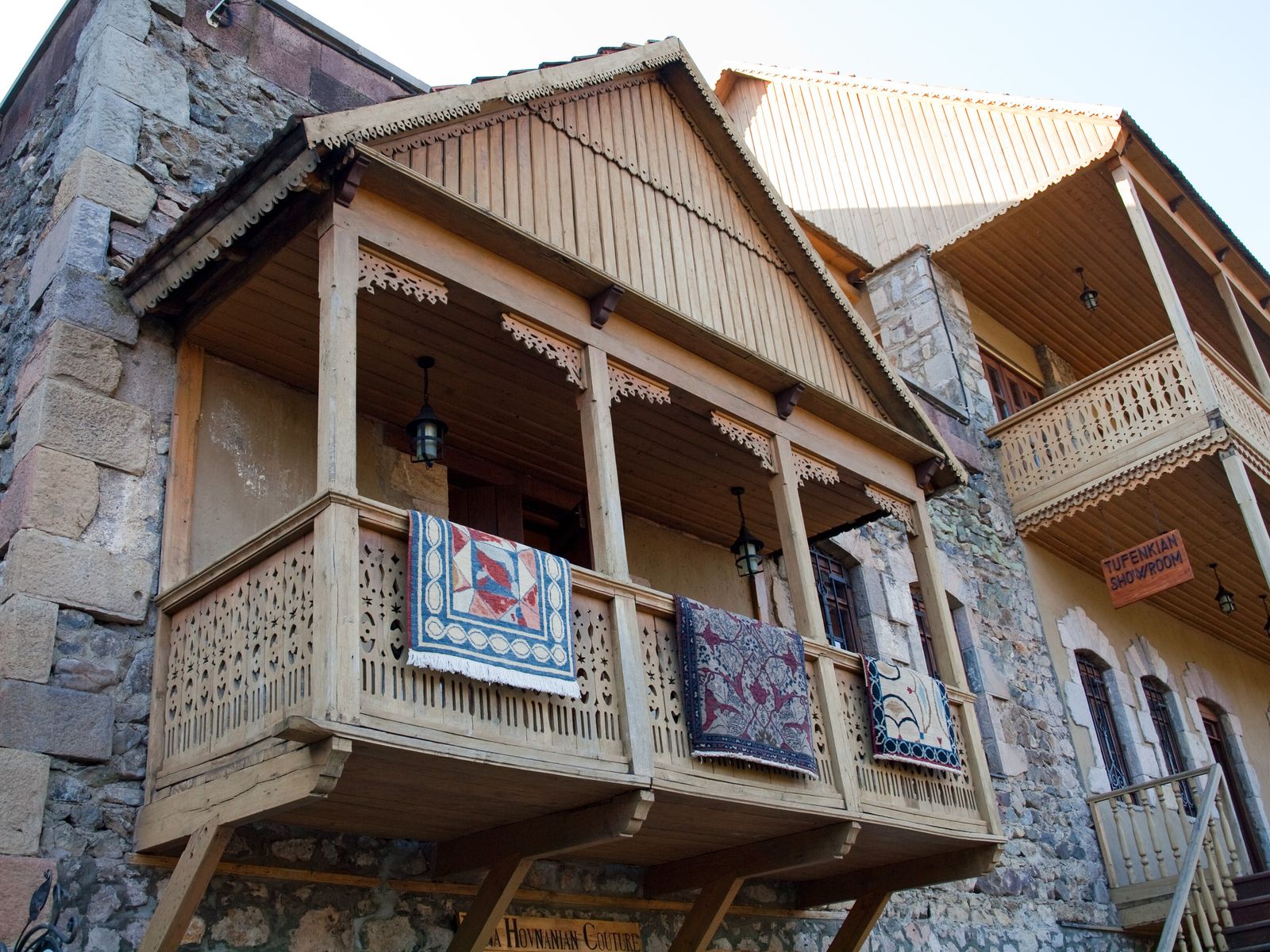
Called the Armenian Switzerland, at 1,500 metres inside a national park of 240 square kilometres — 902 vascular plant species, 150 birds, brown bear and lynx. You come out of a 2.25-kilometre tunnel and the bare plateau simply stops, replaced by beech forest so dense the light turns green. Around 80 km of the Transcaucasian Trail runs through the park.
- Region
- Lake Sevan & Tavush
- From Yerevan
- 1 hour 30
Haghartsin
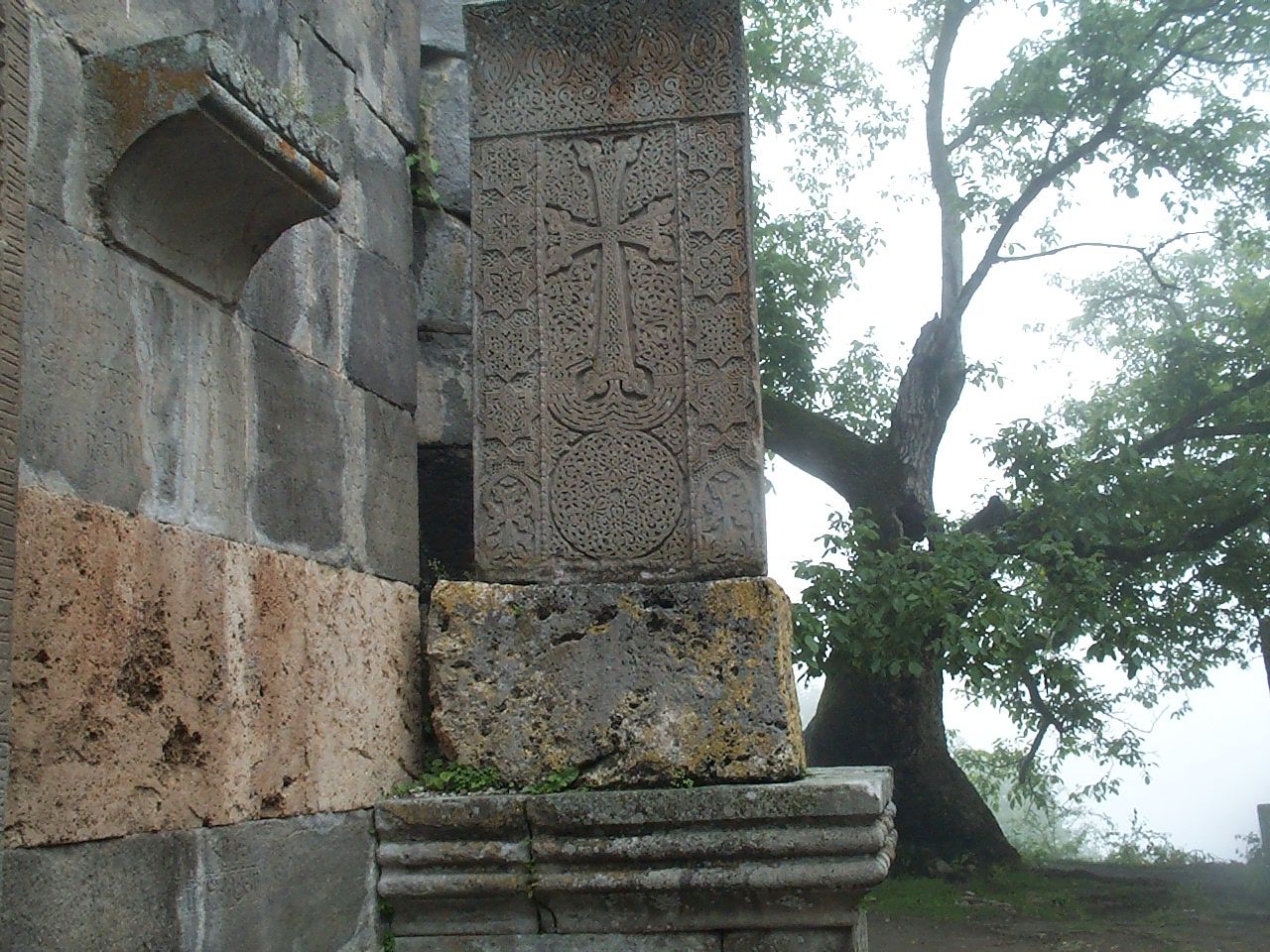
Thirteen kilometres into forest above the Aghstev valley — a complex of the tenth to thirteenth centuries restored in the early 2010s with funding from the Ruler of Sharjah. The refectory of 1248, built by the architect Minas, is a single vaulted hall where two rows of arches meet overhead like an upturned hull.
- Region
- Lake Sevan & Tavush
- From Yerevan
- 1 hour 45
Goshavank
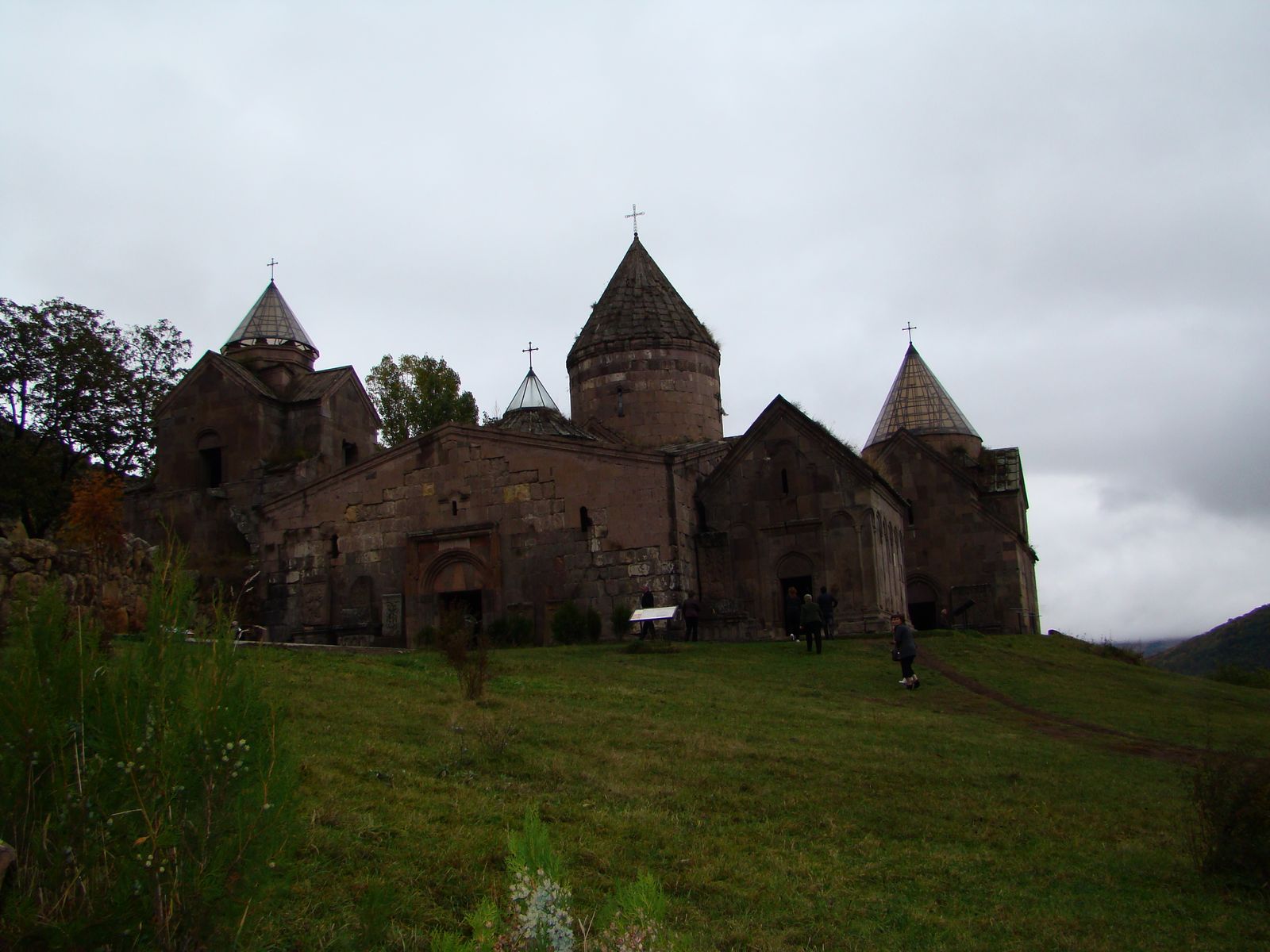
Rebuilt from 1188 by Mkhitar Gosh — statesman, fabulist and author of Armenia's first written law code — after an earthquake destroyed the earlier monastery. It became one of medieval Armenia's leading universities. The openwork khachkar of 1291 by the carver Poghos is undercut so finely that in low sun you can see daylight through the stone.
- Region
- Lake Sevan & Tavush
- From Yerevan
- 2 hours
Lori & Shirak
5 placesThe north: a river canyon strung with medieval monasteries, and a nineteenth-century city of black and red tuff that survived two earthquakes.
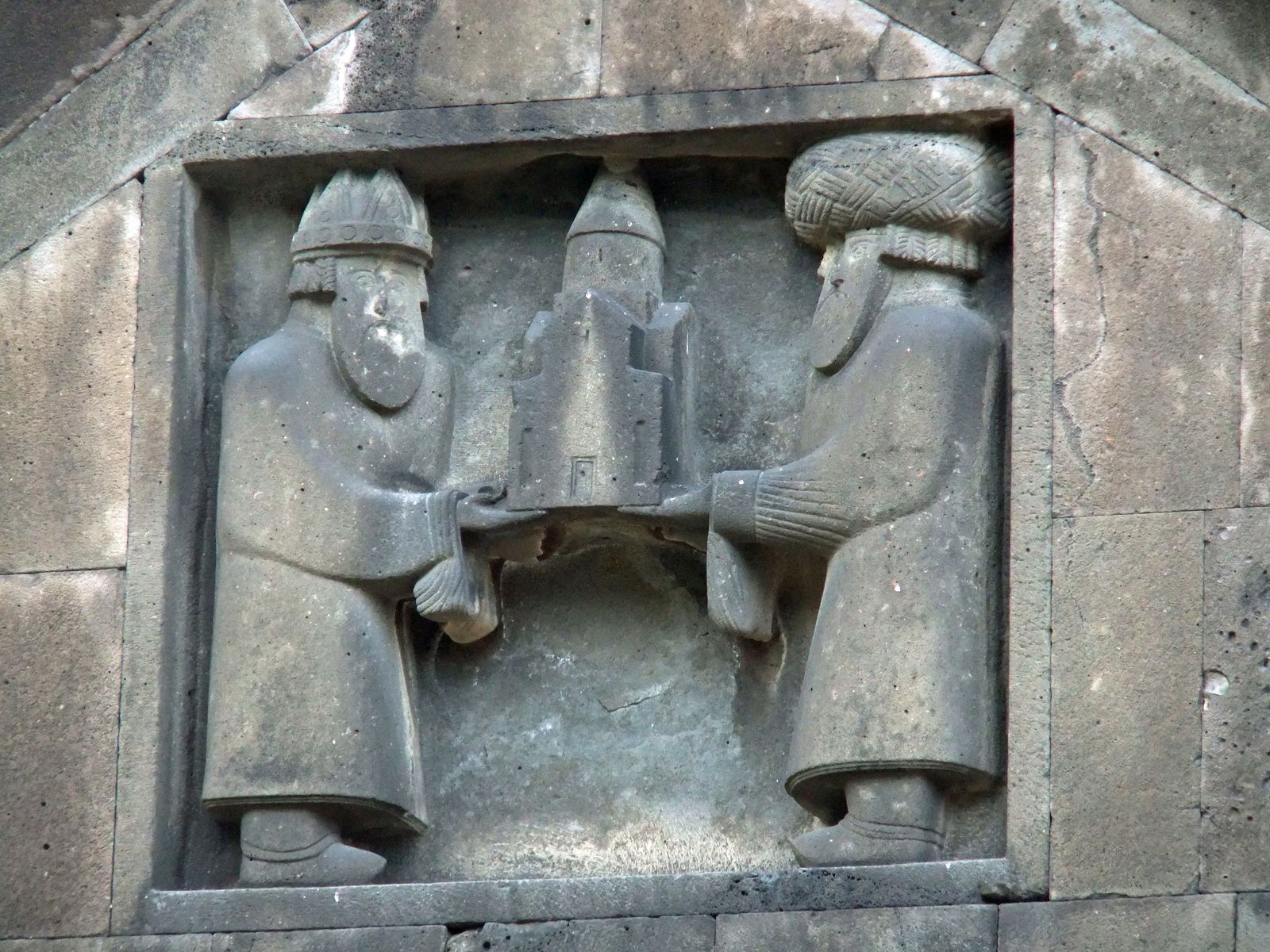
Haghpat Monastery
Founded around 976 by Queen Khosrovanush, wife of Ashot III. The cathedral of Surb Nshan was finished in 991 and the belltower in 1245. It stands on a shelf of the plateau with the Debed gorge falling away behind it, so the belltower's arches frame nothing but air and the far canyon wall.
World Heritage — Haghpat inscribed 1996, property extended in 2000 to include Sanahin
- Region
- Lori & Shirak
- From Yerevan
- 3 hours
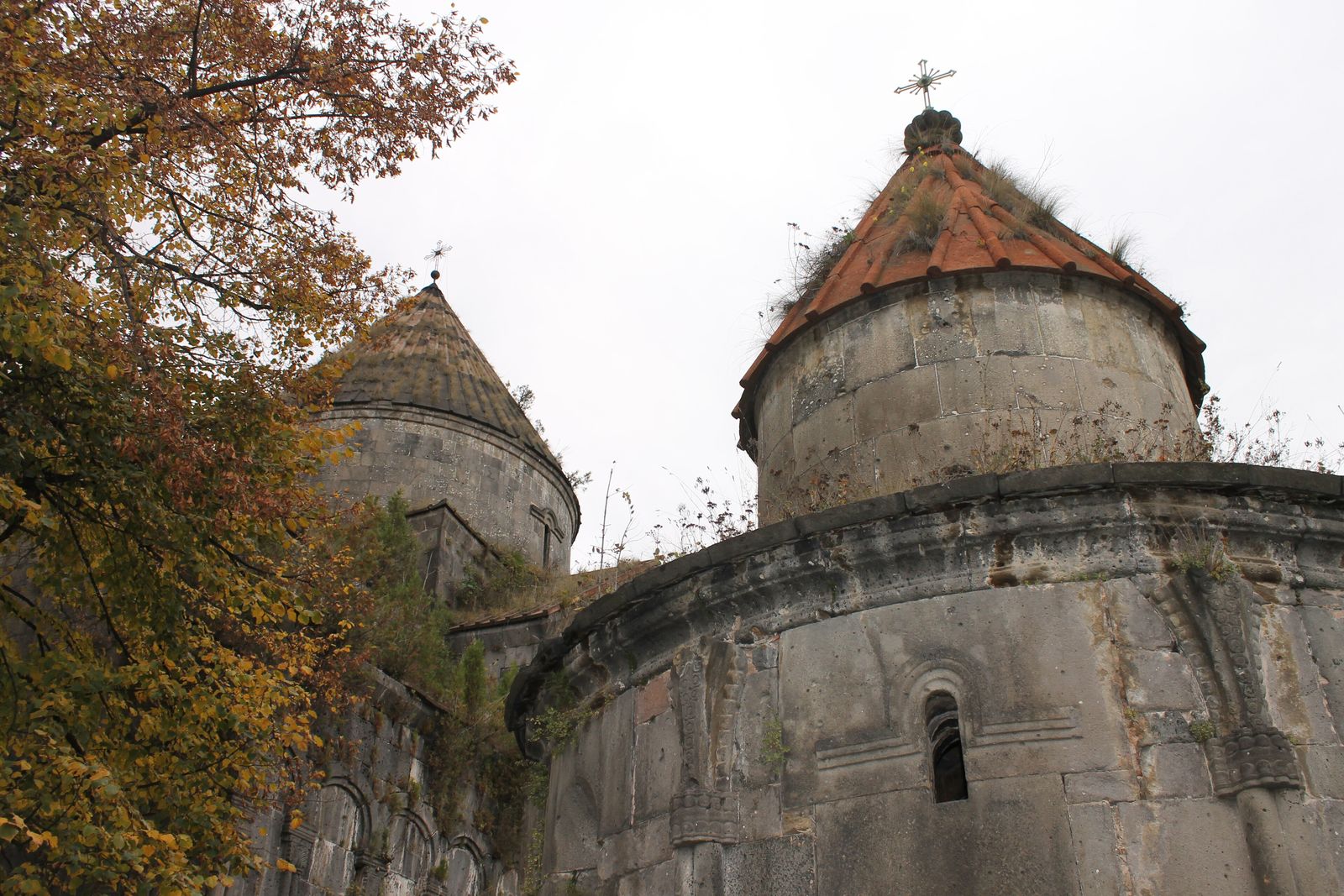
Sanahin Monastery
First built in the 930s or 940s. UNESCO singles it out for its school of illuminators and calligraphers. Between the two churches runs a vaulted gallery lined with stone benches — the eleventh-century lecture hall of Grigor Magistros, worn smooth where students sat. Three kilometres from Haghpat as the crow flies, and a full descent and re-climb by road.
- Region
- Lori & Shirak
- From Yerevan
- 3 hours
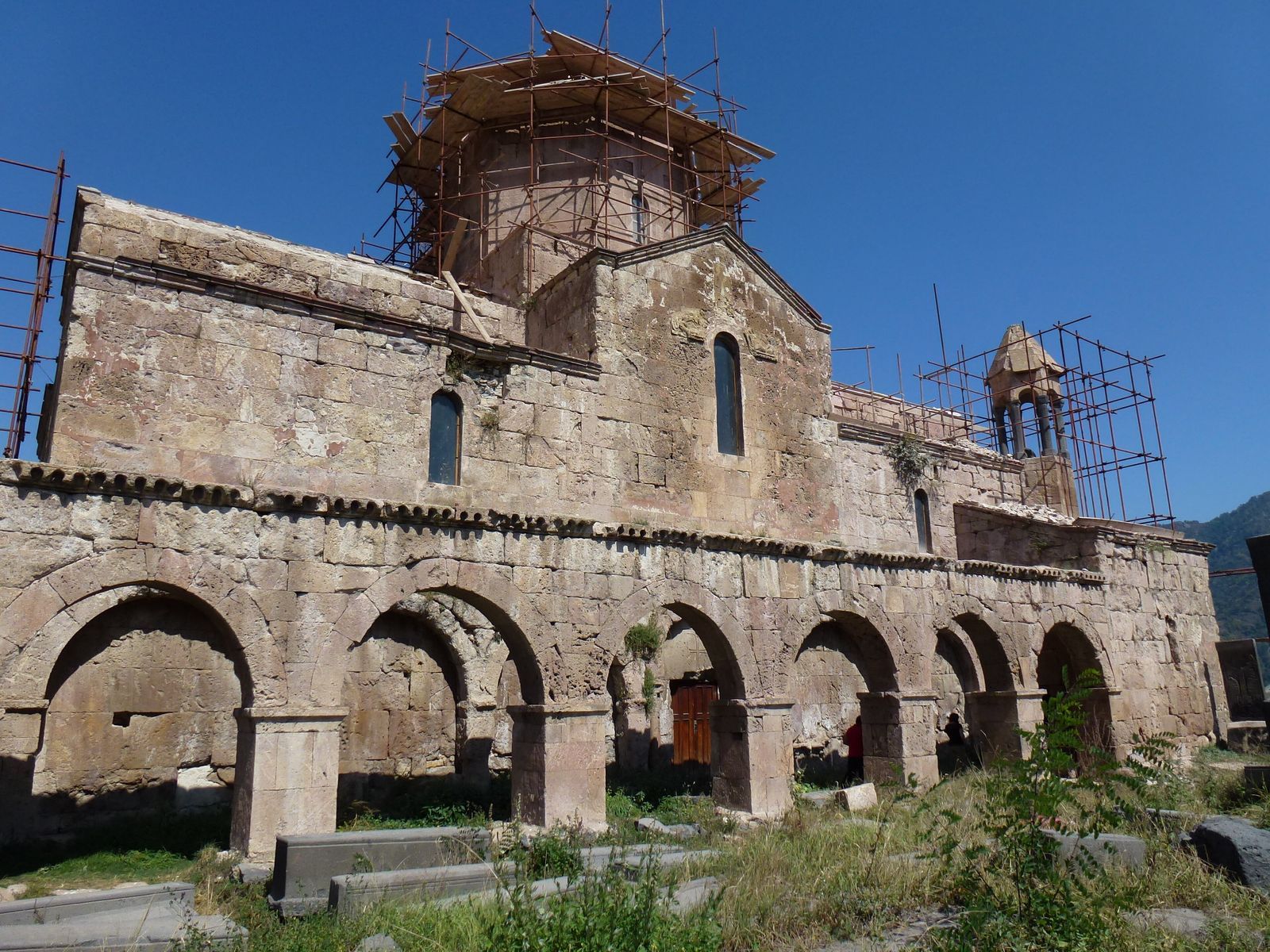
Odzun
A three-nave domed basilica in pink felsite on a plateau above the Debed, generally dated to the fifth to seventh centuries with a major eighth-century rebuilding under Catholicos Hovhannes Odznetsi, who came from the village. At sunset the whole church goes the colour of raw salmon while the gorge below is already dark.
- Region
- Lori & Shirak
- From Yerevan
- 2 hours 50
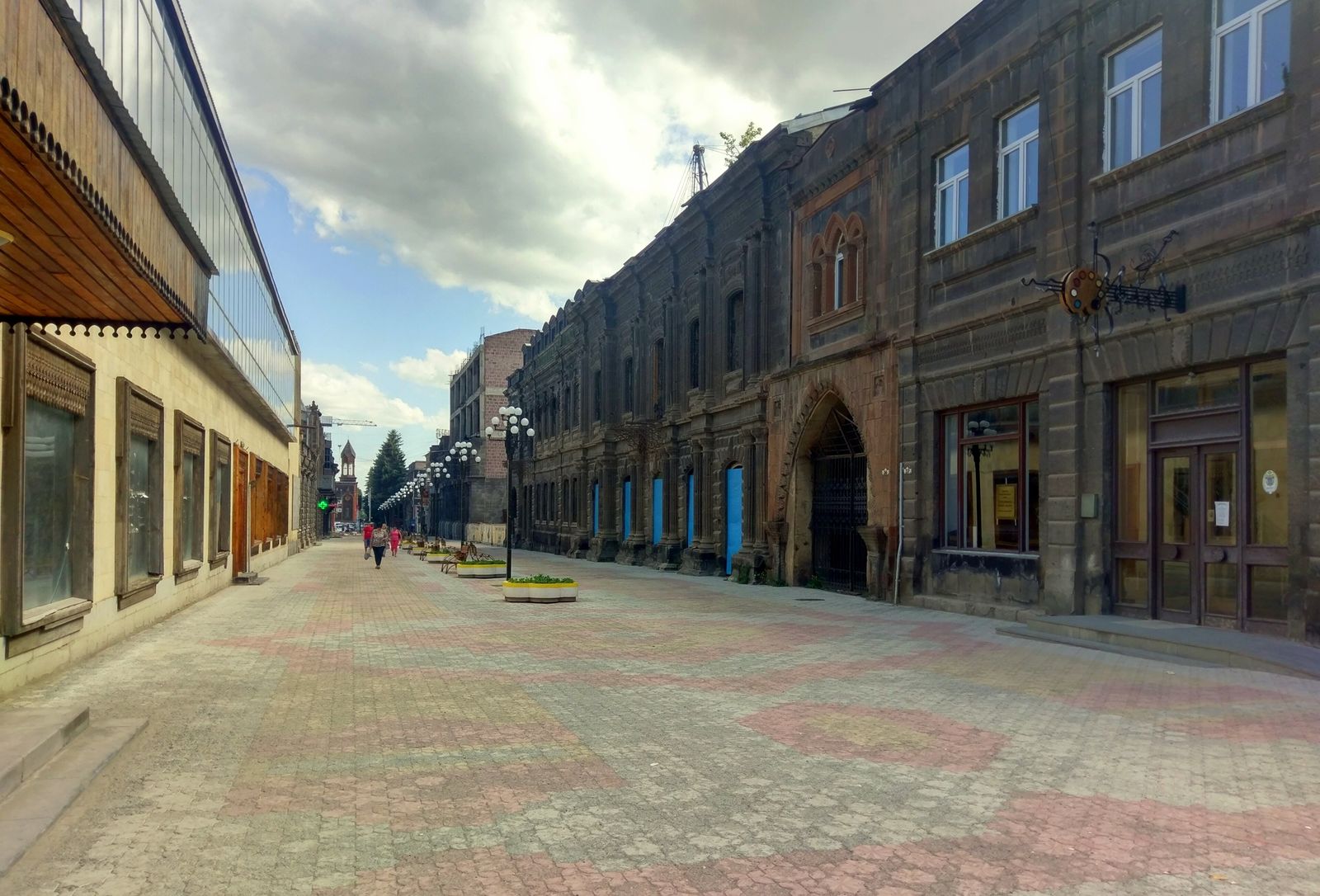
Gyumri
Armenia's second city, 8 km from the Turkish border. The Kumayri district holds over a thousand nineteenth-century buildings and around 1,600 listed monuments, in local red and black tuff with carved balconies and keystone masks. Almost all of it survived the earthquakes of 1926 and 1988. The city calls itself the capital of Armenian humour and can prove it.
- Region
- Lori & Shirak
- From Yerevan
- 2 hours
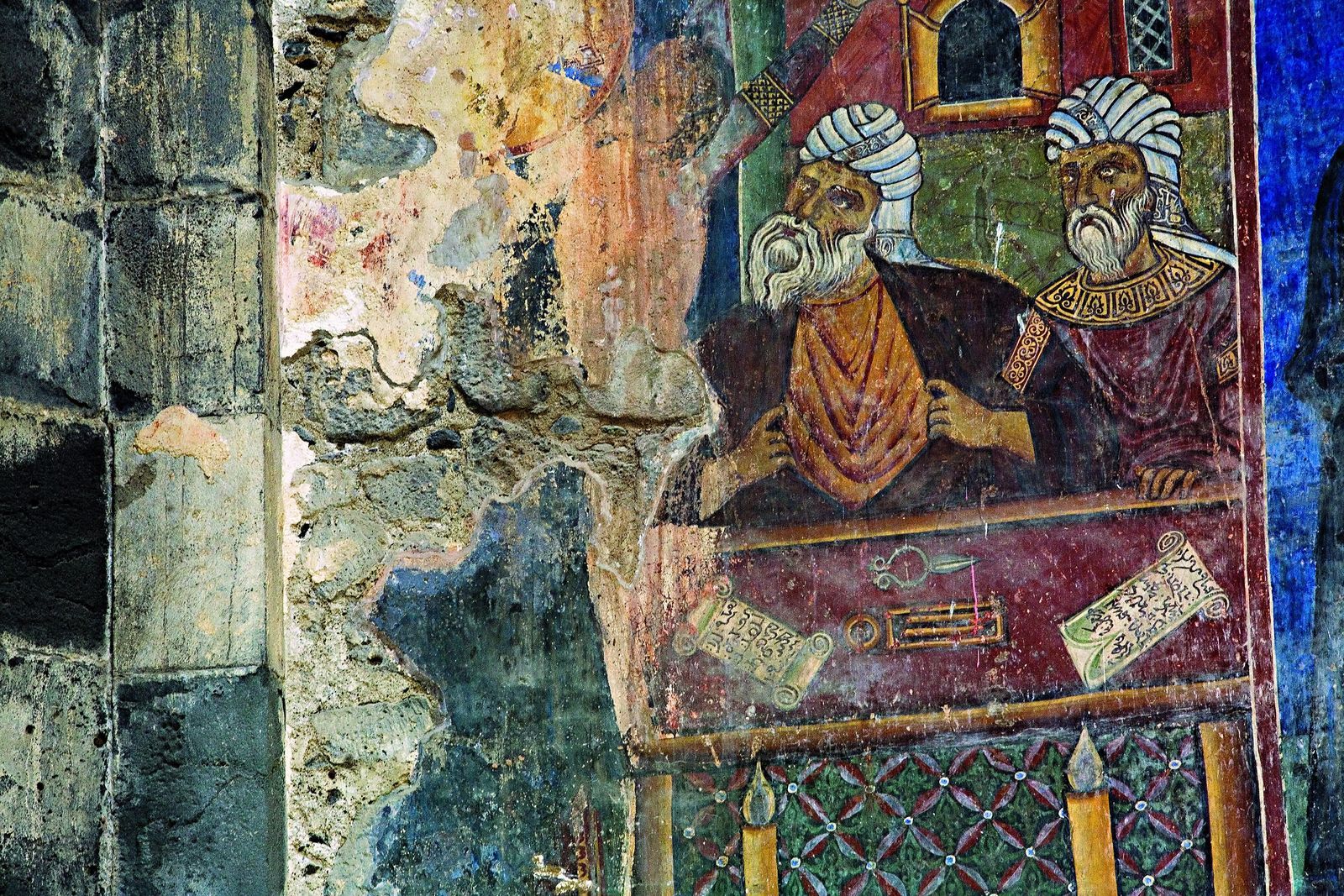
Akhtala
A monastery inside bluish basalt fortress walls above deep canyons, once called Pghindzavank — "copper-mine monastery". Its frescoes were commissioned by Ivane Zakarian between 1205 and 1216, in Armenian-Chalcedonian style with inscriptions in Georgian and Greek, and are described as some of the finest Byzantine painting outside Byzantium.
- Region
- Lori & Shirak
- From Yerevan
- 3 hours 15
Syunik
4 placesThe deep south — high, empty, and the most dramatic driving in the country, ending at a monastery on a promontory above a thousand-metre gorge.
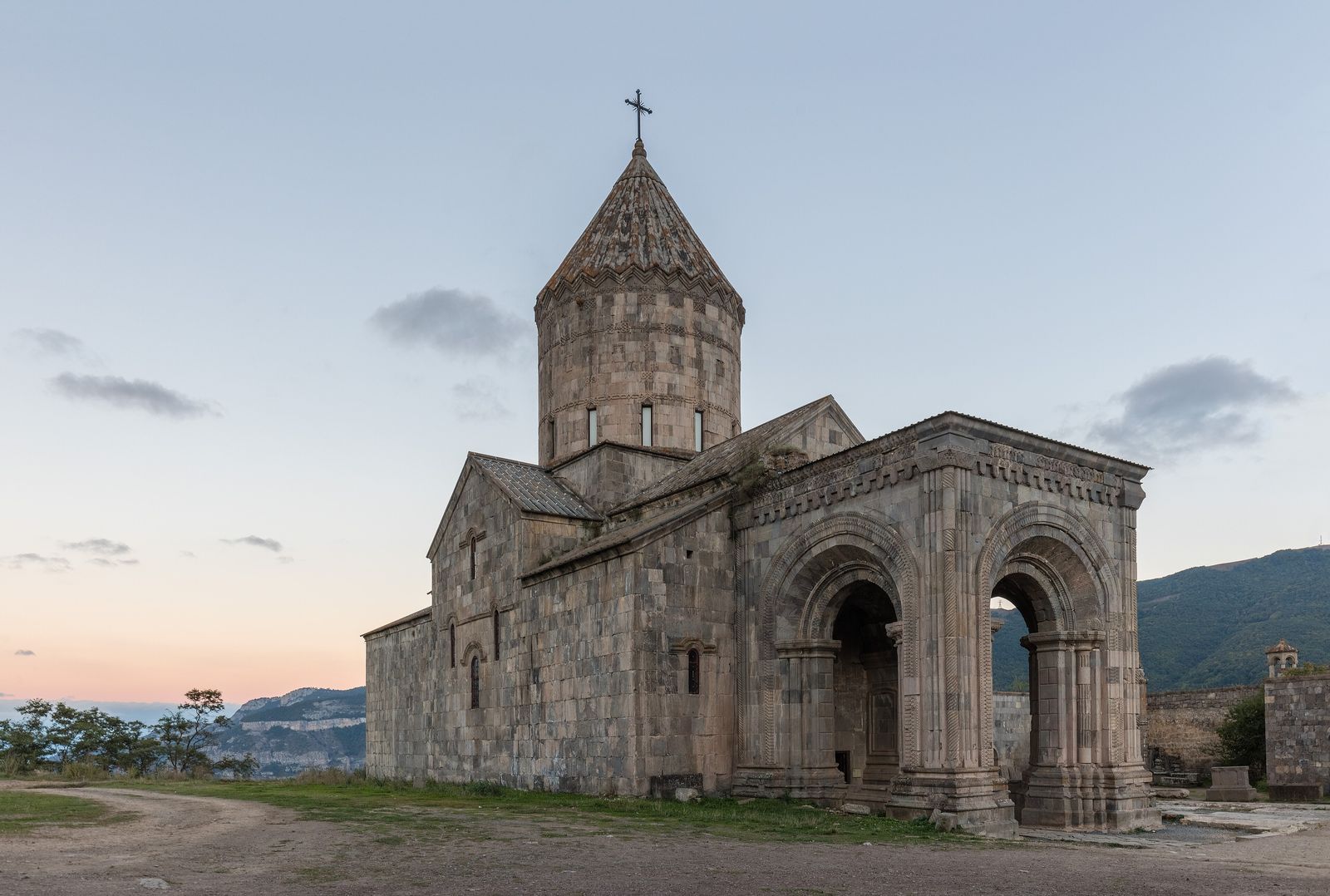
Tatev Monastery
Founded in the ninth century on a promontory with the Vorotan gorge on three sides. By the fourteenth century its university was among the most important in the Armenian world. Look for the gavazan — an octagonal pillar hinged at its base, built to sway at the approach of an earthquake or an army on horseback.
- Region
- Syunik
- From Yerevan
- 4 hours 30
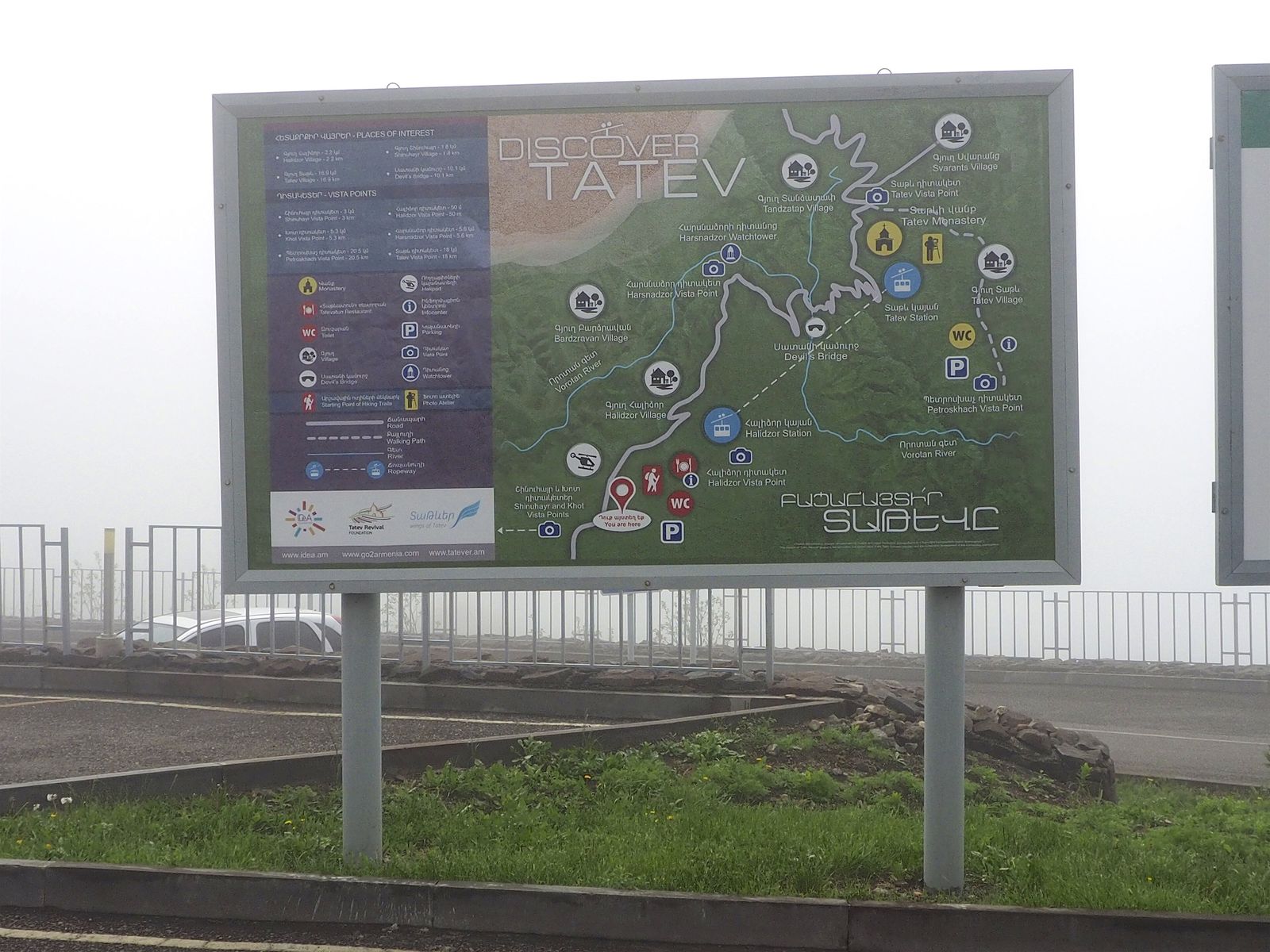
Wings of Tatev
A cable car of 5,752 metres, opened in 2010, holding the Guinness record as the world's longest reversible aerial tramway. It crosses the Vorotan gorge in about twelve minutes, several hundred metres above the river. The valley floor simply drops away beneath the cabin.
- Region
- Syunik
- From Yerevan
- 4 hours 15
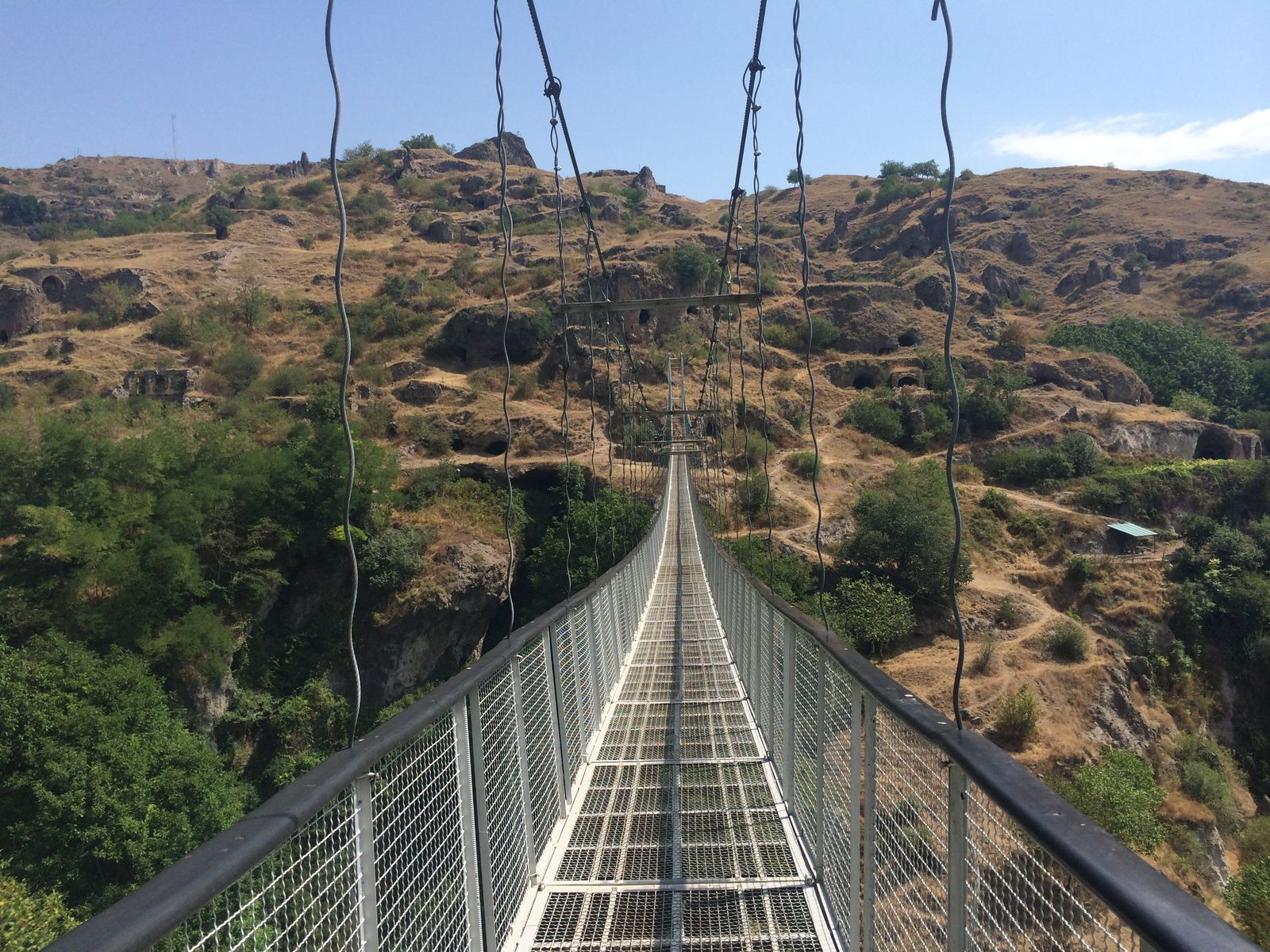
Khndzoresk
A canyon of cut-rock and cave dwellings inhabited well into the twentieth century, the last families leaving in the 1950s. A 160-metre swinging footbridge, built by villagers in 2012, crosses the ravine. It moves, which is the point.
- Region
- Syunik
- From Yerevan
- 4 hours
Zorats Karer
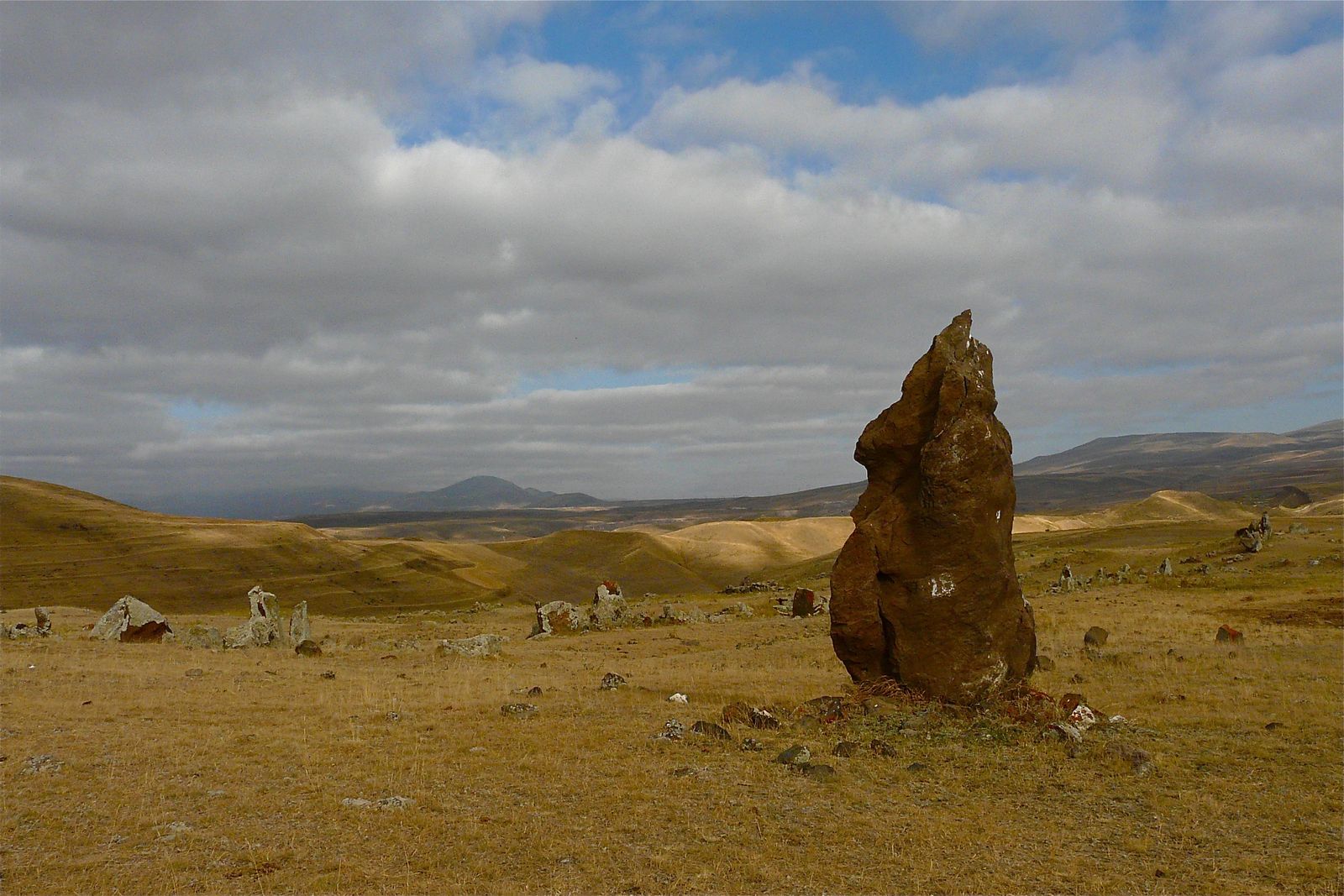
Also called Karahunj: over two hundred basalt stones standing on a plateau at about 1,770 metres, many pierced with smooth round holes. It is widely marketed as an ancient observatory, an interpretation that is contested rather than established. What is certain is that it is a burial and ritual site of great age, and that standing among the stones in the wind is remarkable.
- Region
- Syunik
- From Yerevan
- 3 hours 30
Build a route
Pick the places, and we will work out the driving
Send us a list of what you want to see. We will tell you honestly what fits in your days, what does not, and which two things are three hours apart when the map suggests otherwise.